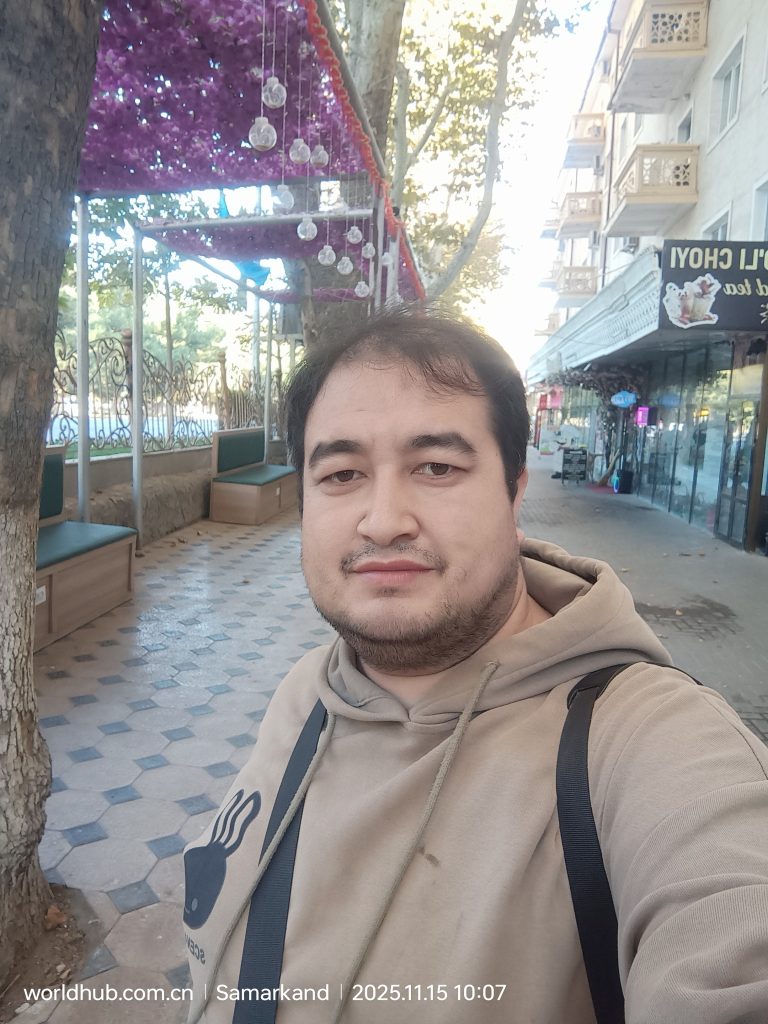
I AM MR AOSIMAN TUOHESUN FROM ZEPU COUNTY,XINJIANG,CHINA,COMPANy AT YIWU CITY ,ZHEJIANG PROVINCE.
I. Arrival in Samarkand: Accommodation and Initial Impressions of the City
On the evening of November 12, 2025, I arrived in Samarkand, Uzbekistan, and checked into a local characteristic family hotel. This hotel, renovated from a residential building, is quite common in downtown Samarkand. Such family accommodations not only retain the local lifestyle but also meet the basic needs of global tourists with high cost-performance ratio. The accommodation fee was 200 RMB, equivalent to approximately 350,000 Uzbekistani Som, which is at a medium level compared to similar local accommodations.
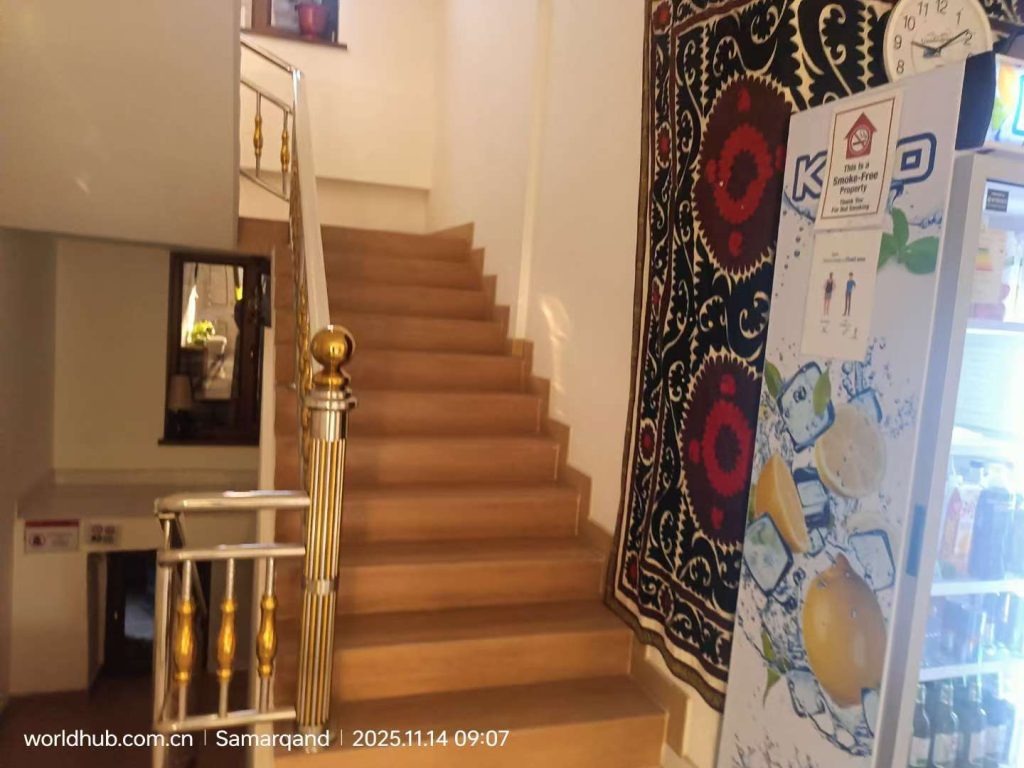
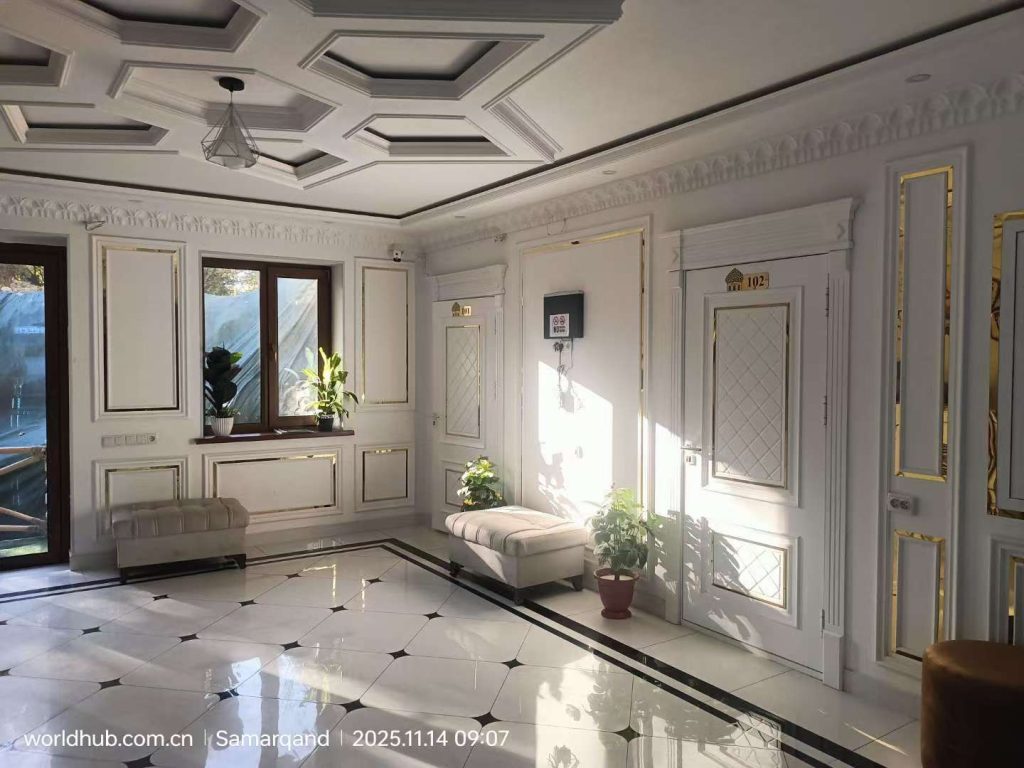
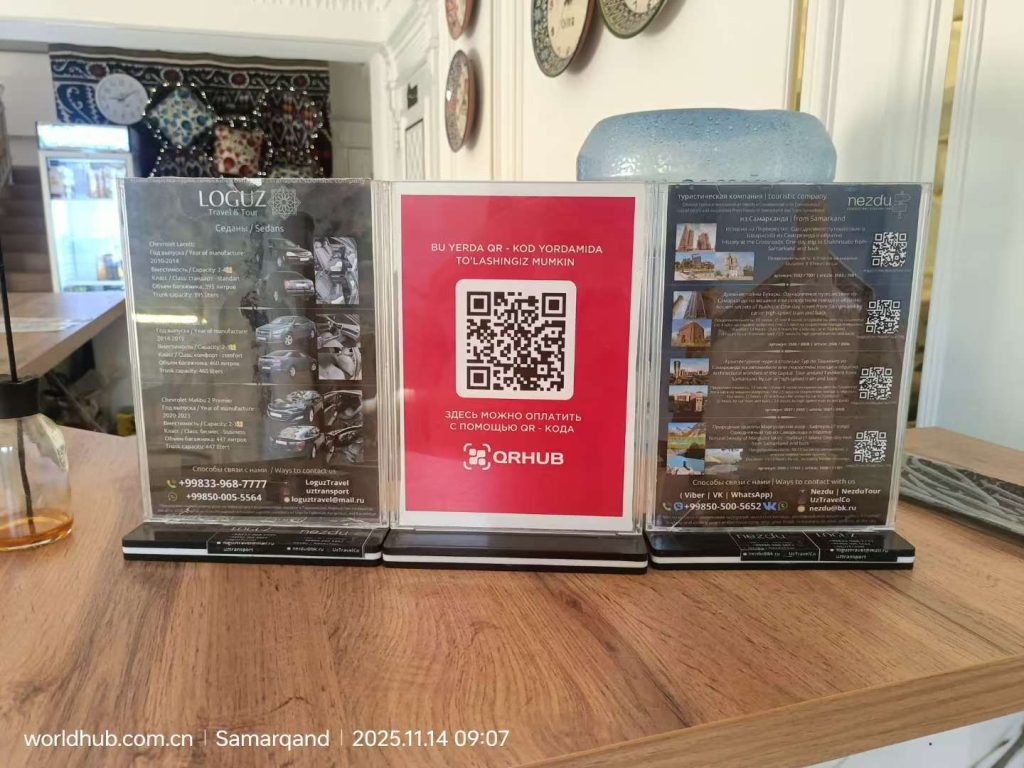
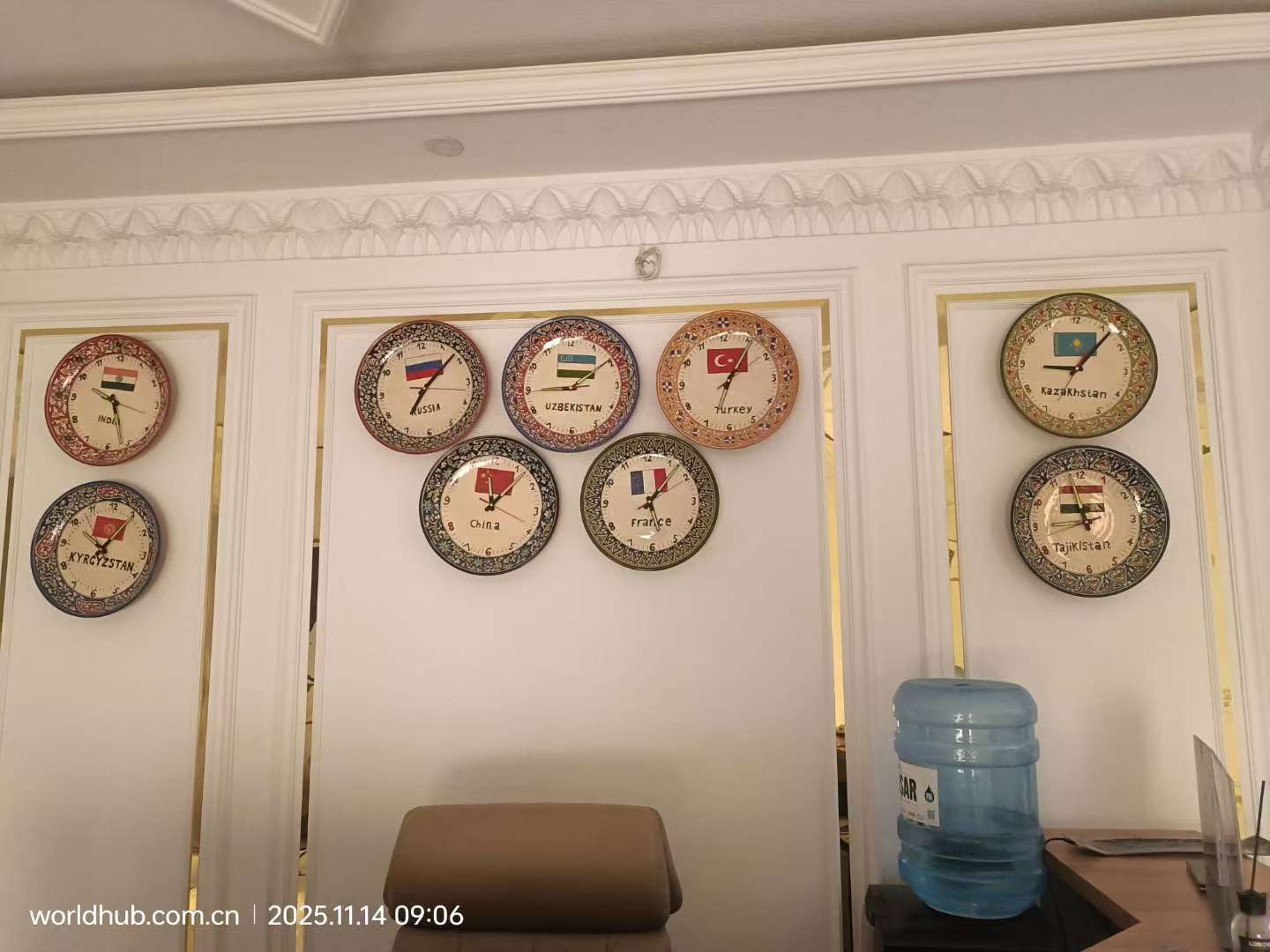
The hotel (hotel name imran hotel)has three floors in total. The basement floor is a canteen that serves breakfast from 7:00 AM to 10:00 AM every day, while the first and second floors are guest rooms. A mulberry tree, common locally, is planted in the courtyard, becoming a cozy place for tourists from various countries to rest and communicate. My room was simply and practically furnished, with neatly laid HDF floors that felt stable and silent when stepped on. The room was equipped with a large double bed, a solid wood desk, and an en-suite bathroom with complete toiletries. The overall cleanliness exceeded my expectations. During my stay, I noticed that the hotel guests were from many countries, including Germany, France, Turkey, China, India, Pakistan, and the Philippines. Most of them came for Samarkand’s historical sites. Although the front desk staff were not very fluent in English, they always provided patient assistance through gestures and translation software, and even took the initiative to recommend local niche attractions and characteristic restaurants.
II. Accompanied by Old Friends: Experience of City Landmarks and Local Customs
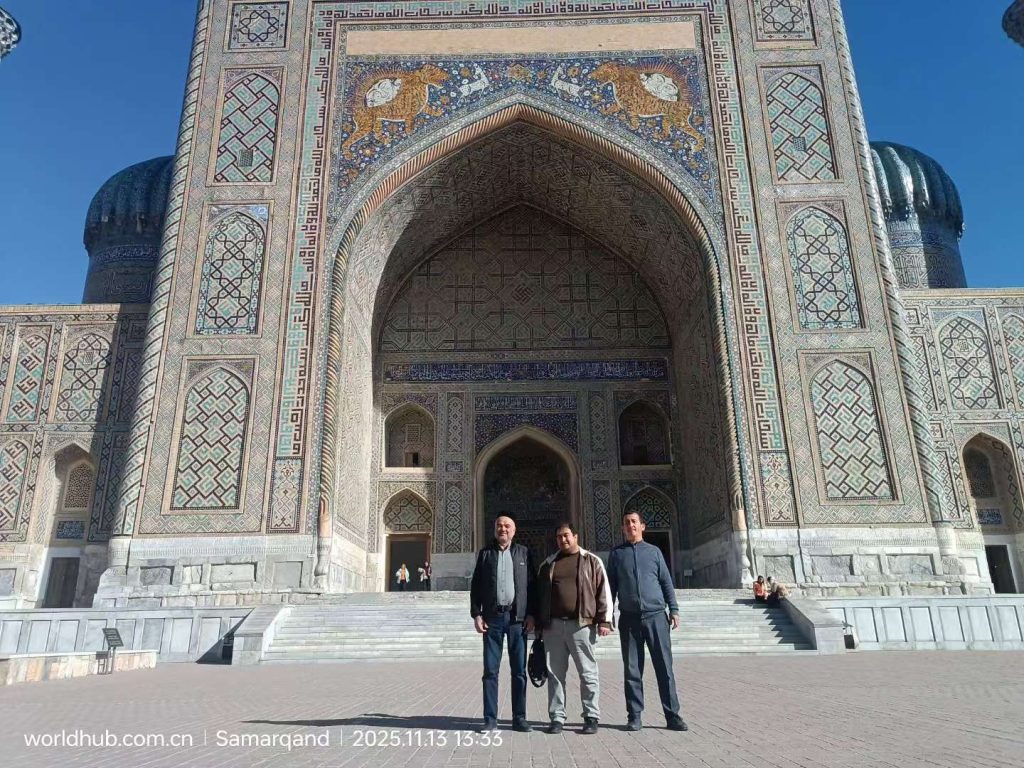

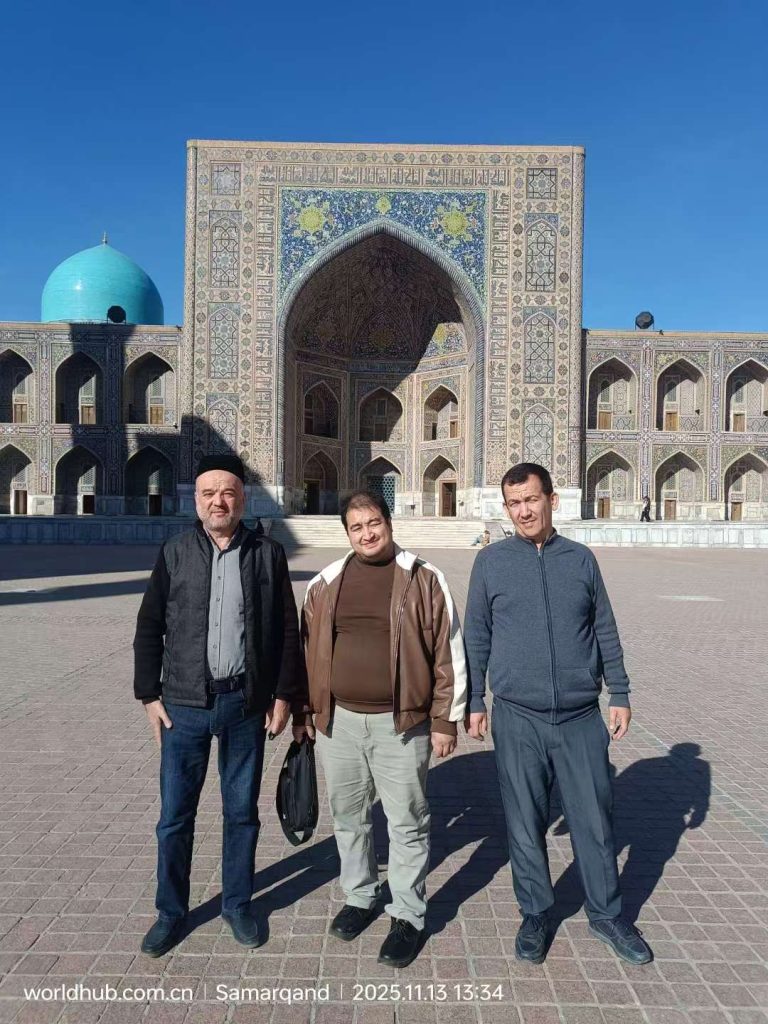
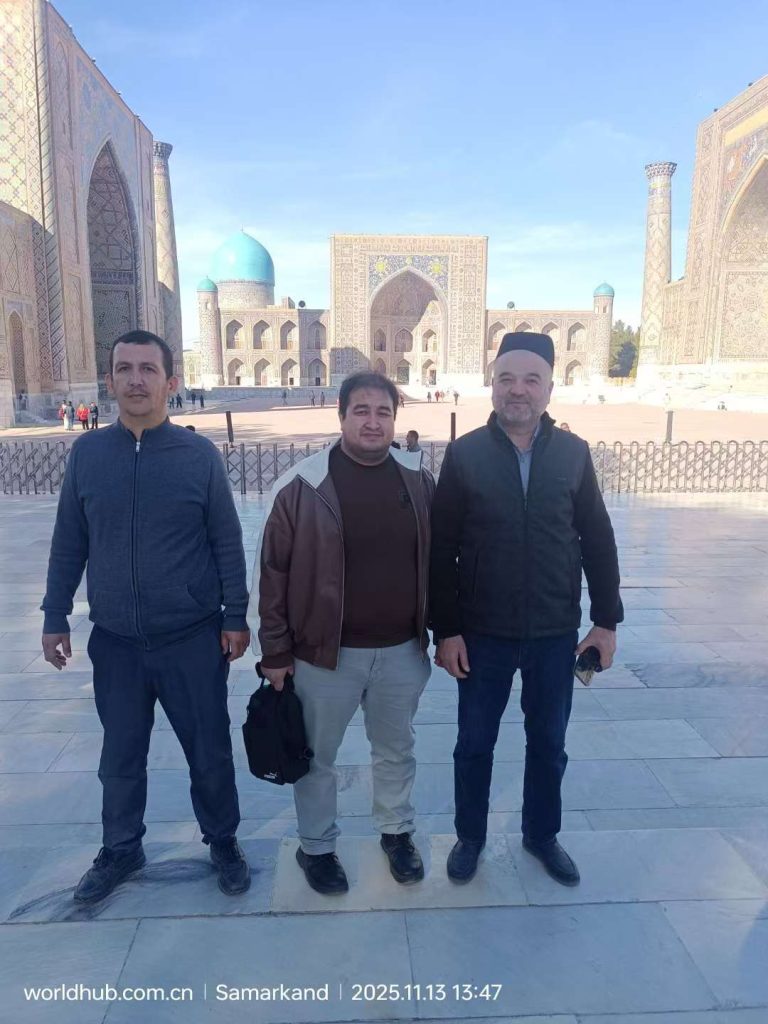
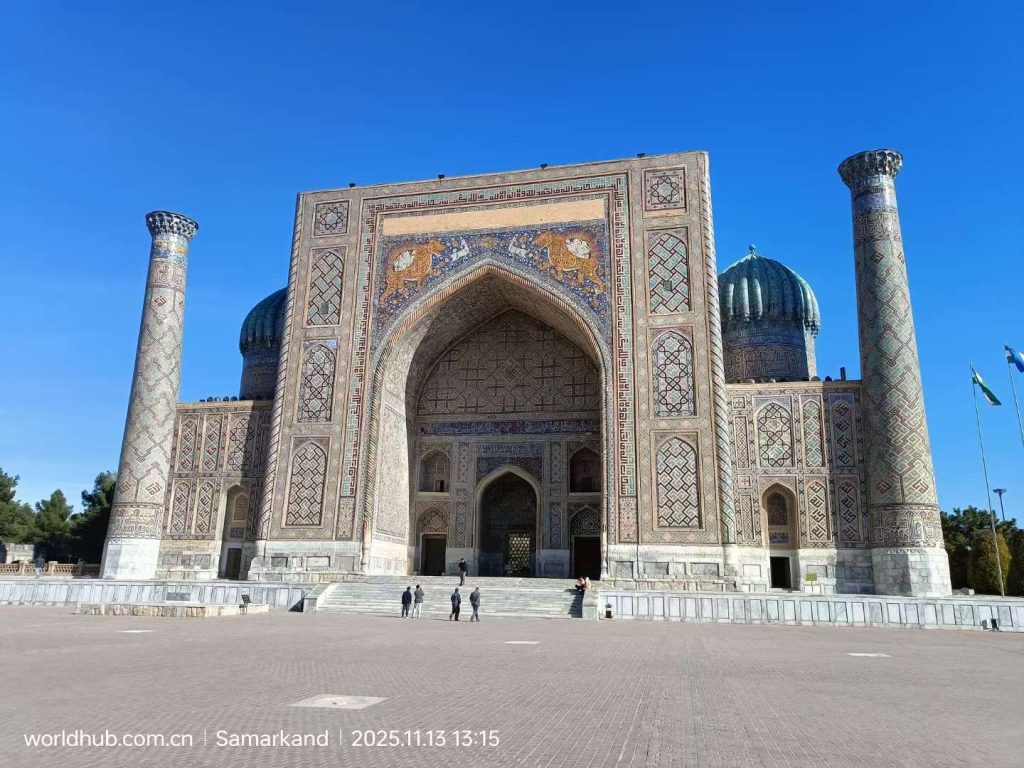
Early on November 13, two local friends, Baktiyar and Ulug, drove their own Chevrolet cars to the hotel entrance. In Samarkand, Chevrolet is one of the most common car brands on the streets. Many businessmen choose its high-end models as their daily travel tools, which are both practical and recognizable. First, they took me to Samarkand International Airport. The architectural appearance of this airport is highly designed, resembling a thick book slowly opening, symbolizing the cultural door of this ancient Silk Road city opening to the world. The simple lines are cleverly integrated with local traditional architectural elements, leaving a deep impression.
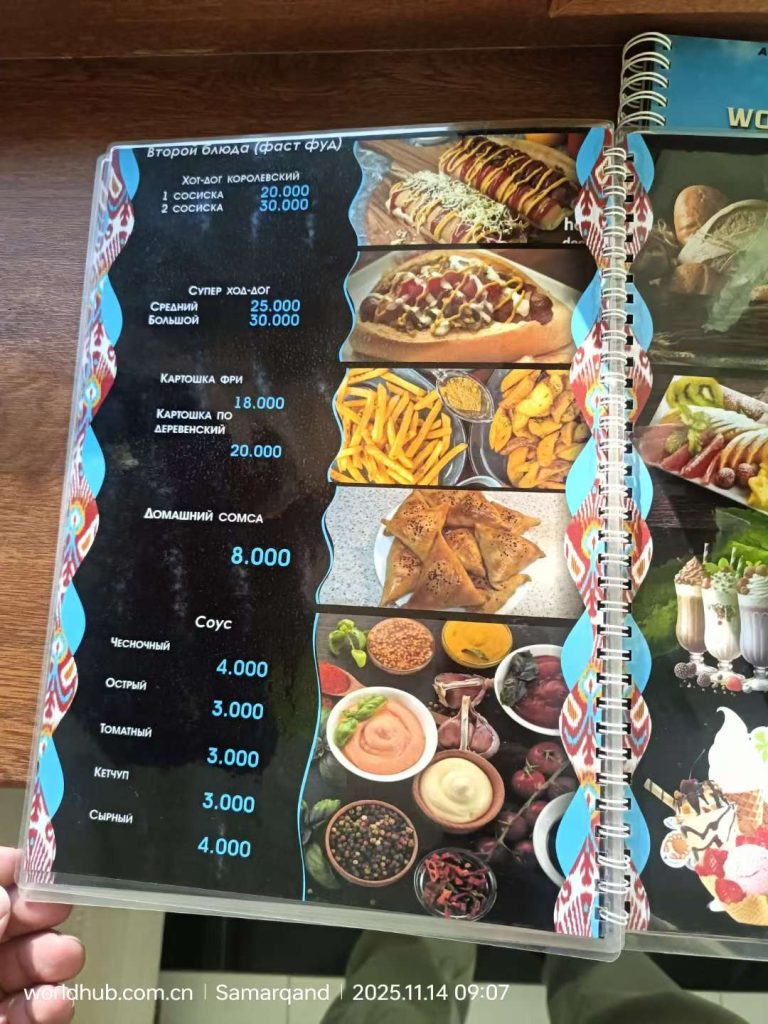
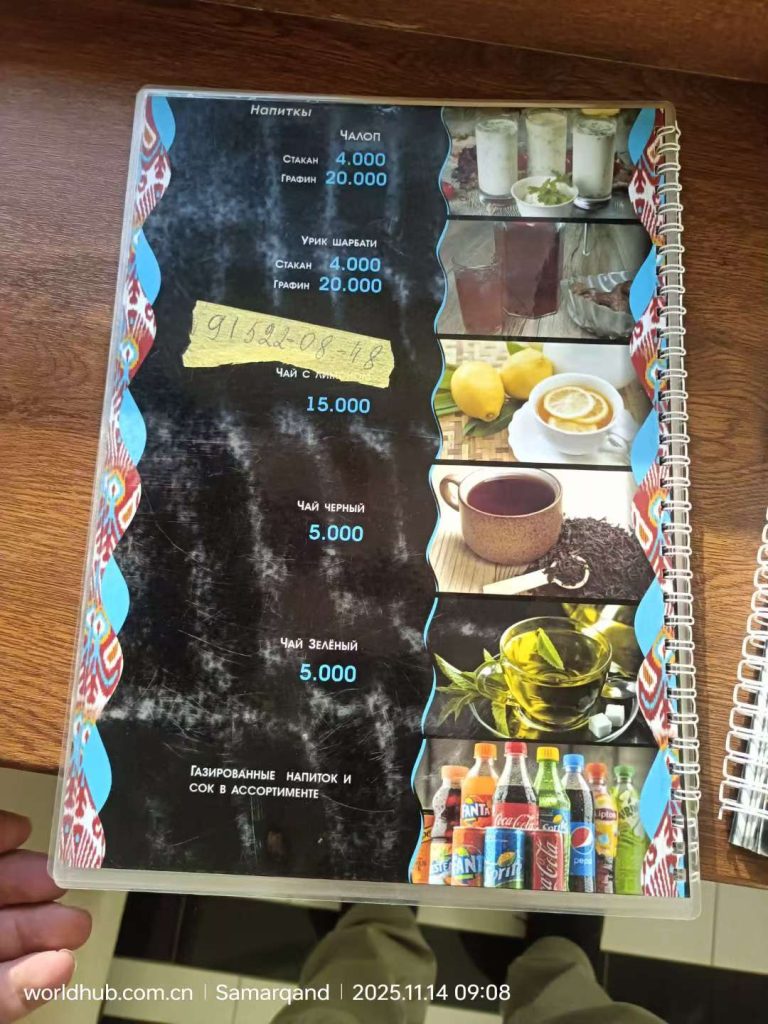
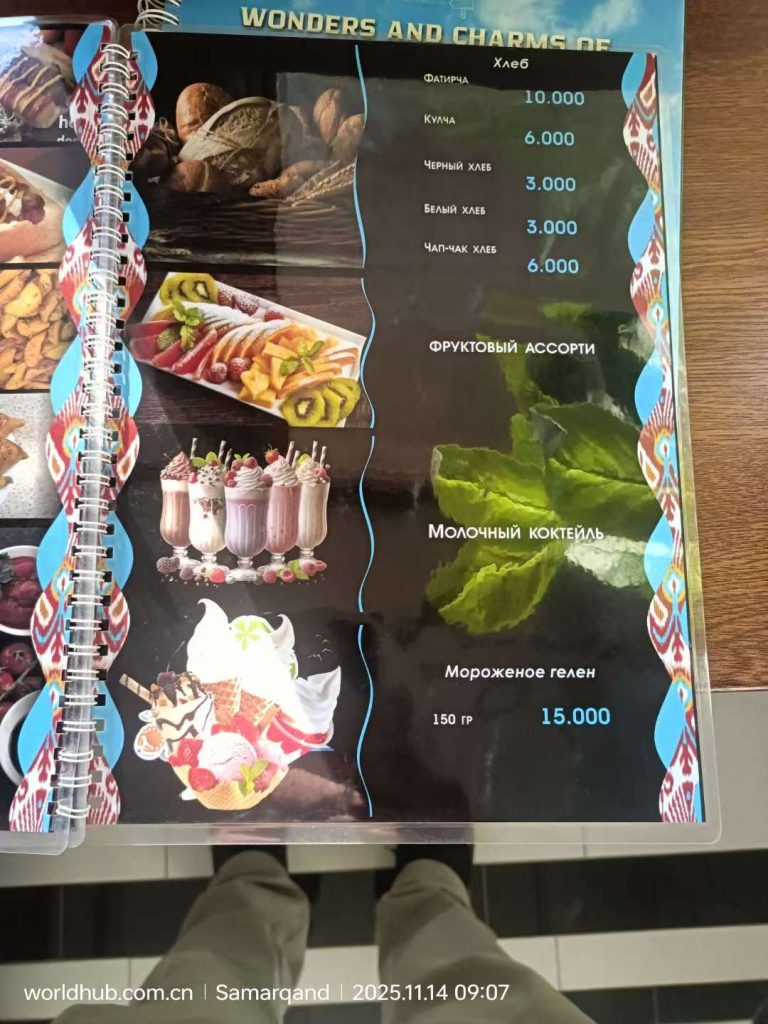
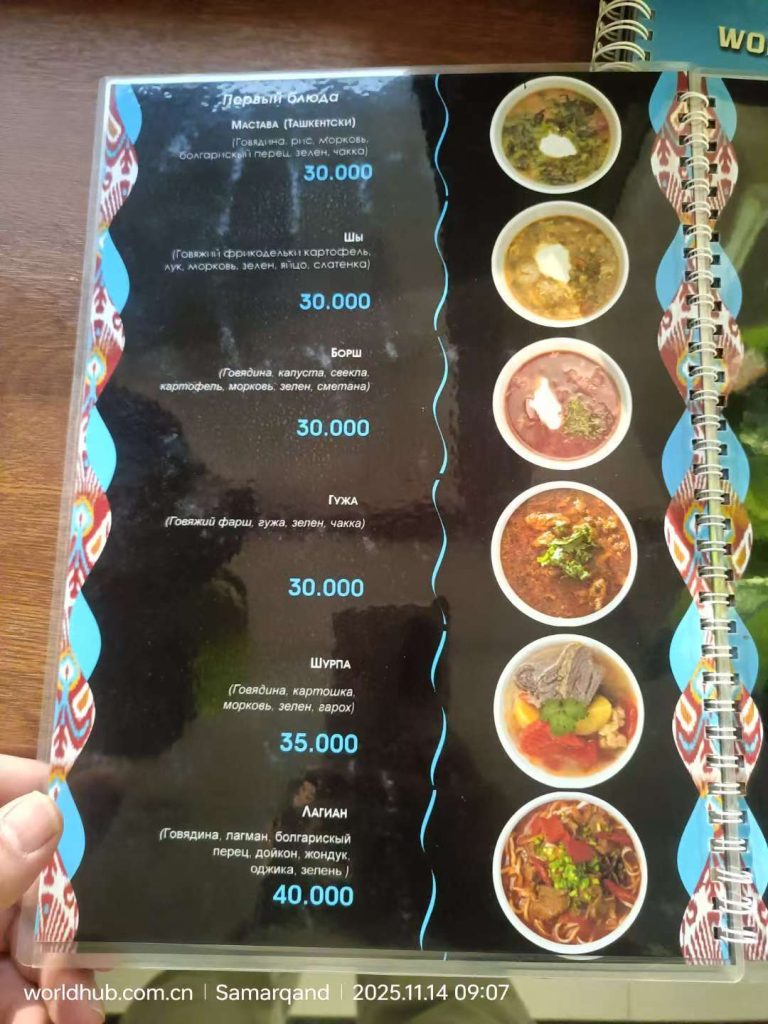
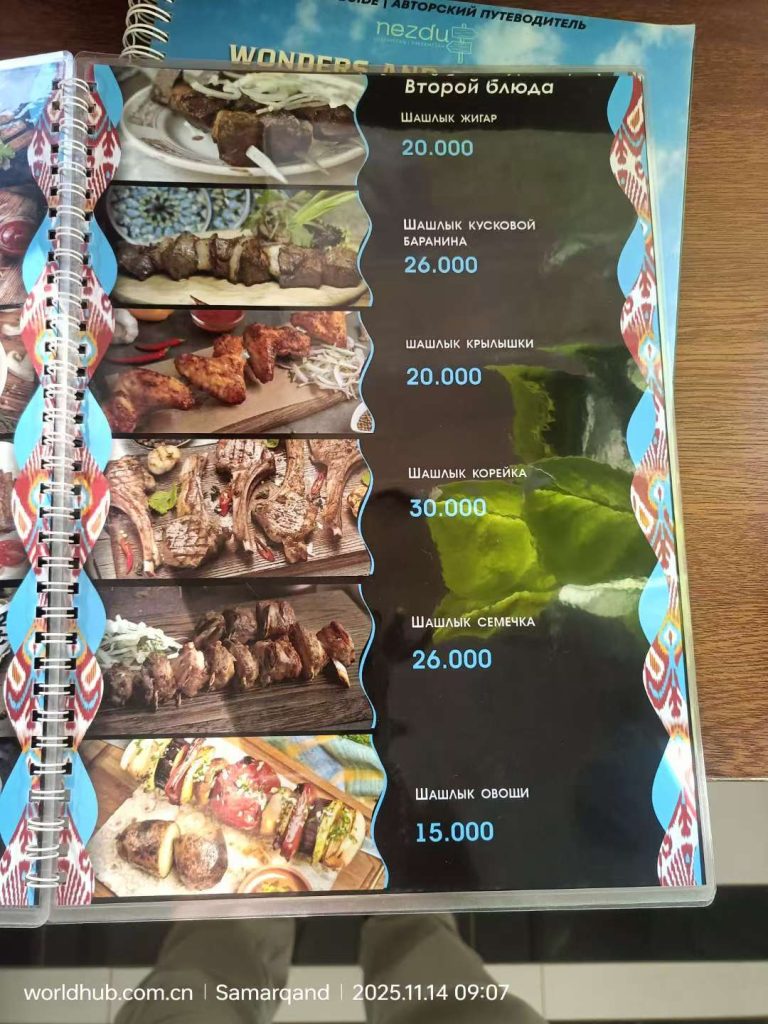
At noon, my friends took me to a local characteristic restaurant for lunch. Traditional restaurants in Uzbekistan retain the custom of separate seating for men and women. Women mostly dine in independent private rooms, while men dine in the hall. The restaurant uses handwritten receipts to record dishes, which is simple and warm. On the table, the samsa (baked buns) had a crispy outer skin and a tender filling of mutton and onions, and the gravy overflowed when bitten. The mutton kebab and beef kebab were slowly roasted over charcoal fire, with a crispy outer skin and tender meat. They were eaten with locally made yogurt sauce, which effectively neutralized the greasiness. During the meal, Baktiyar and Ulug enthusiastically introduced the business environment of Samarkand. They told me that around the restaurant is a large-scale building materials market in Samarkand. Baktiyar’s hardware and electrical business and Ulug’s safe sales business both rely on this mature business district. It not only meets local construction needs but also exports some products to neighboring Central Asian countries.
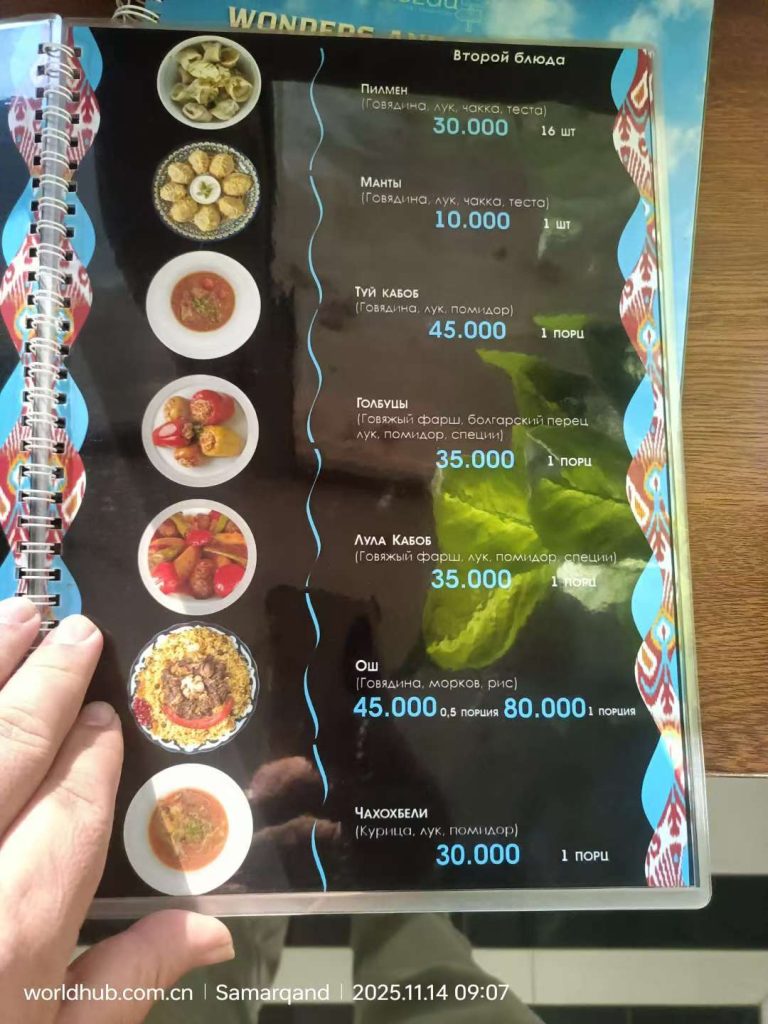
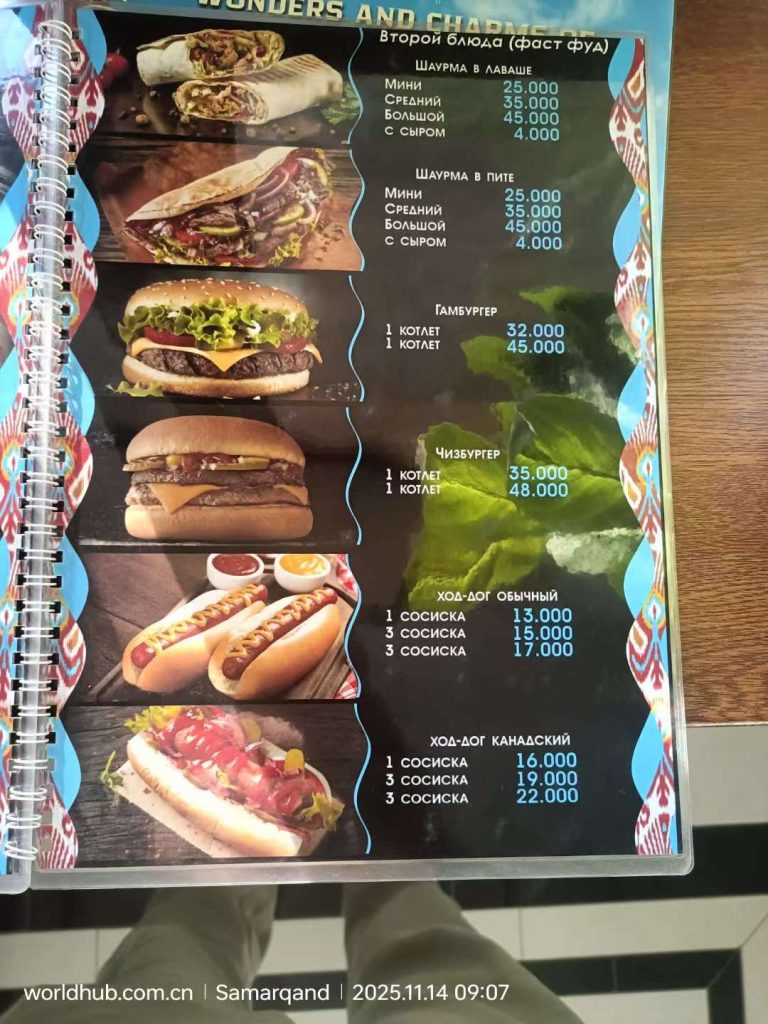
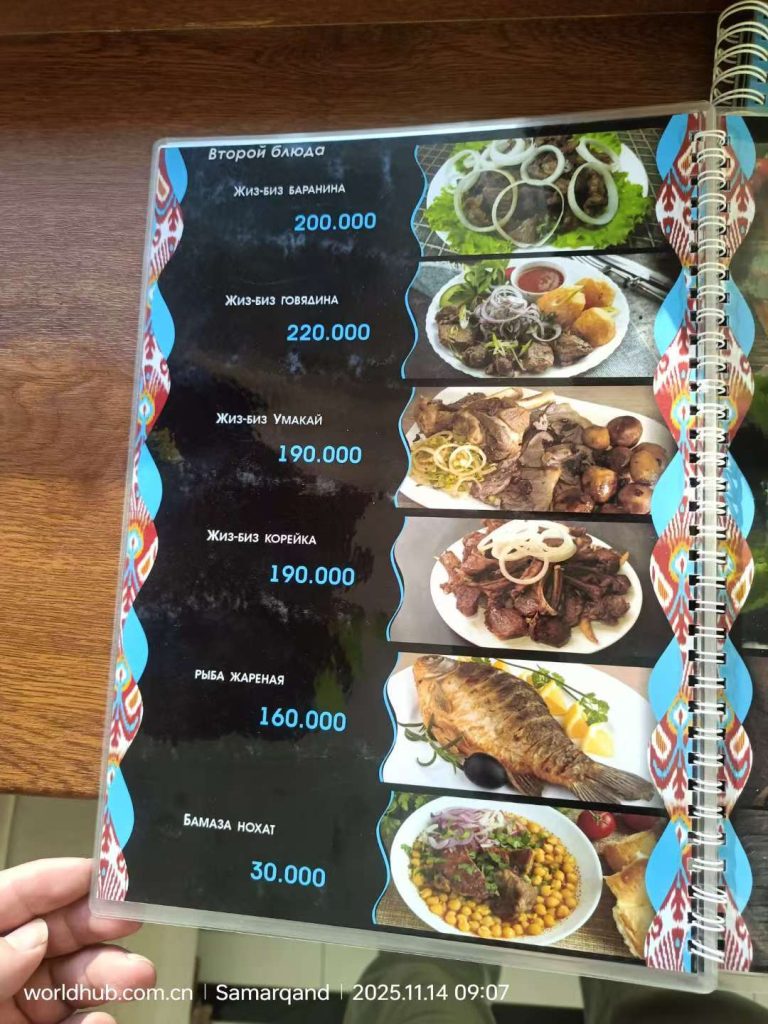
III. In-depth Market Research: Multi-category Investigation and Platform Promotion
From November 13 to 18, I spent five days visiting various markets and stores in Samarkand to conduct a comprehensive investigation of local consumer demand and commodity supply. At the same time, I introduced the advantages and shopping methods of the WorldHub e-commerce platform to merchants and consumers.
(I) Building Materials and Hardware & Electrical Appliances Market
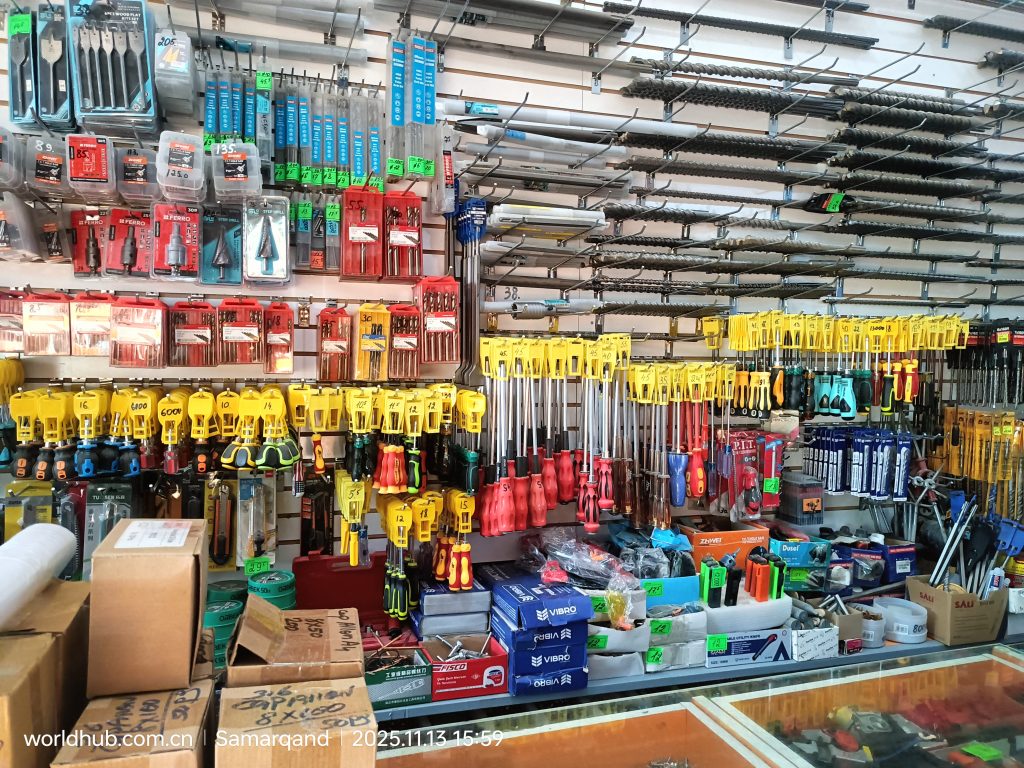
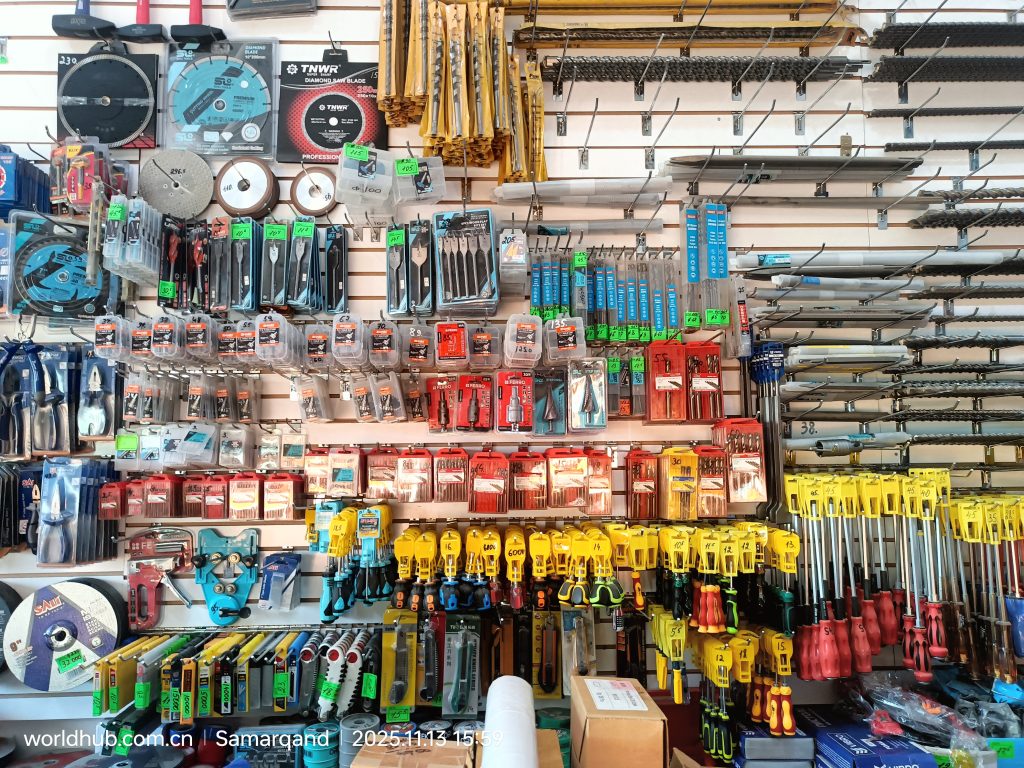
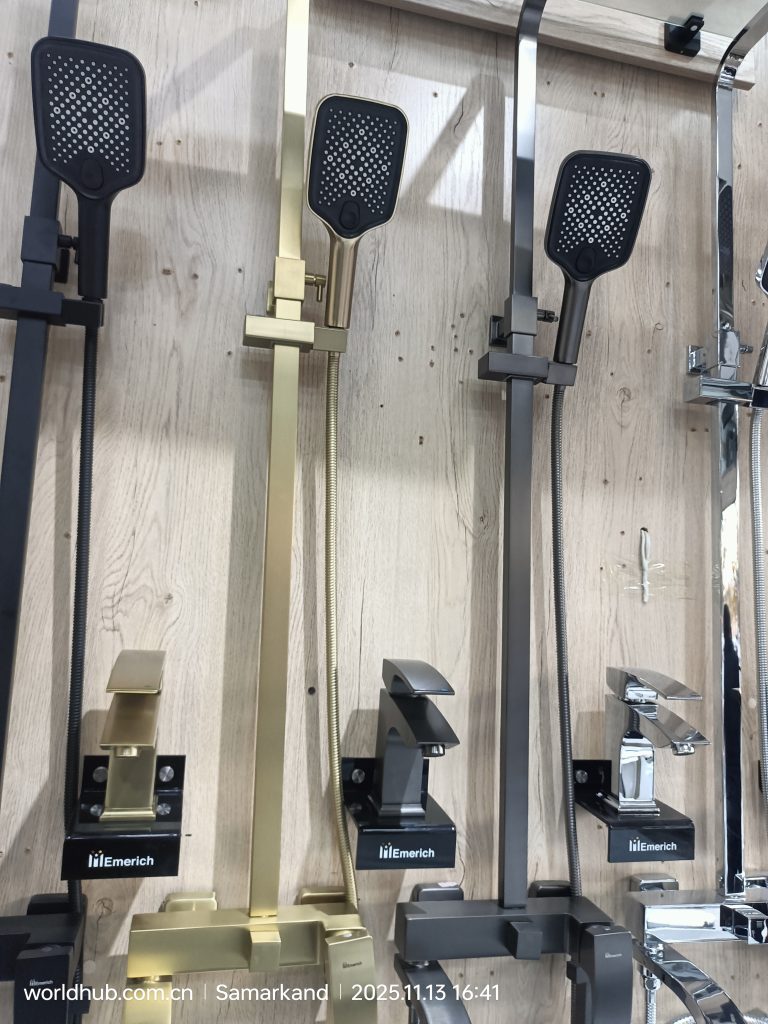
Samarkand’s building materials market is large-scale. As an important node in the Central Asian building materials industry, it gathers various products such as cement, steel, glass, ceramics, wood, door and window products, and coatings. There are not only standardized products from the state-owned “Uzqurilishmateriallari” Group but also characteristic building materials from local private enterprises. Some aluminum alloy doors and windows produced by foreign-funded enterprises are also exported to the Central Asian Union countries. In Baktiyar’s hardware and electrical store, various tools are neatly arranged, mainly local brands and imported products from China. He told me that with the advancement of Samarkand’s ancient city restoration project and new construction projects, the demand for high-quality hardware tools is constantly rising, but the types of products on the market are limited and the prices are relatively high. Ulug’s safe store mainly serves merchants and families, with mechanical locks as the main products, and few types of smart safes. Adil’s store sells decoration materials, including HDF and SFC floors, with a long supply cycle. I introduced to them that the WorldHub platform can connect with high-quality building materials and hardware suppliers in China, enrich product categories, shorten the supply cycle, and support bulk purchasing and customized services, which can effectively reduce procurement costs. Both of them showed strong interest and immediately asked about the platform’s entry process and logistics timeliness.
(II) Daily Necessities and Clothing, Shoes & Hats Market
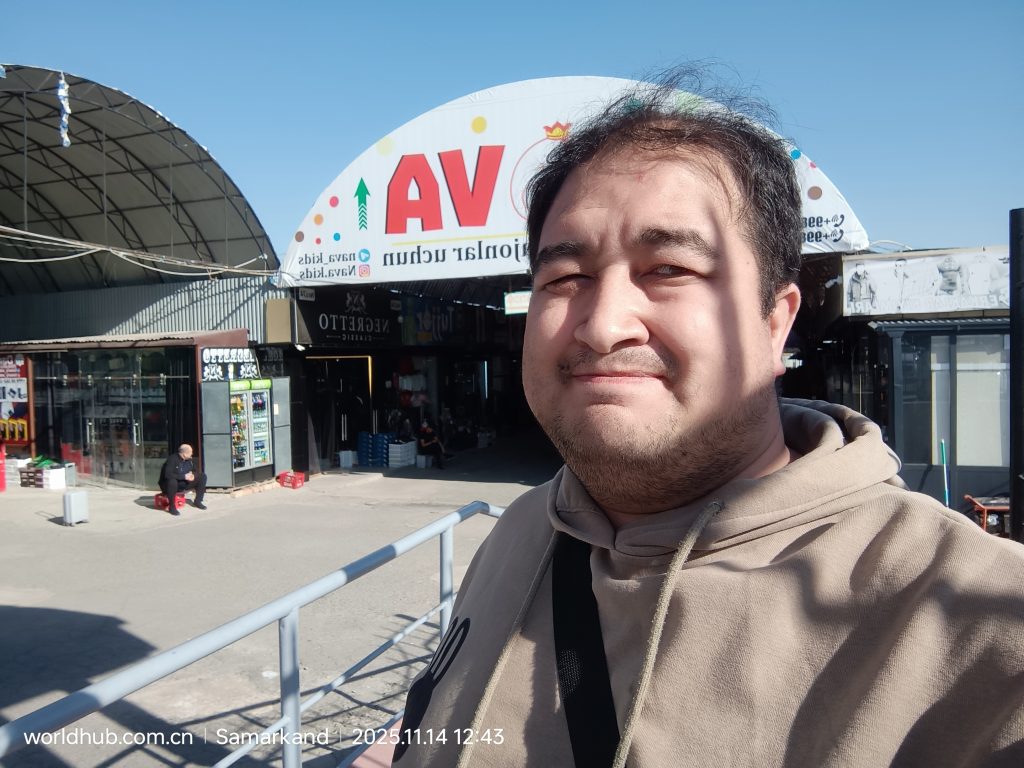
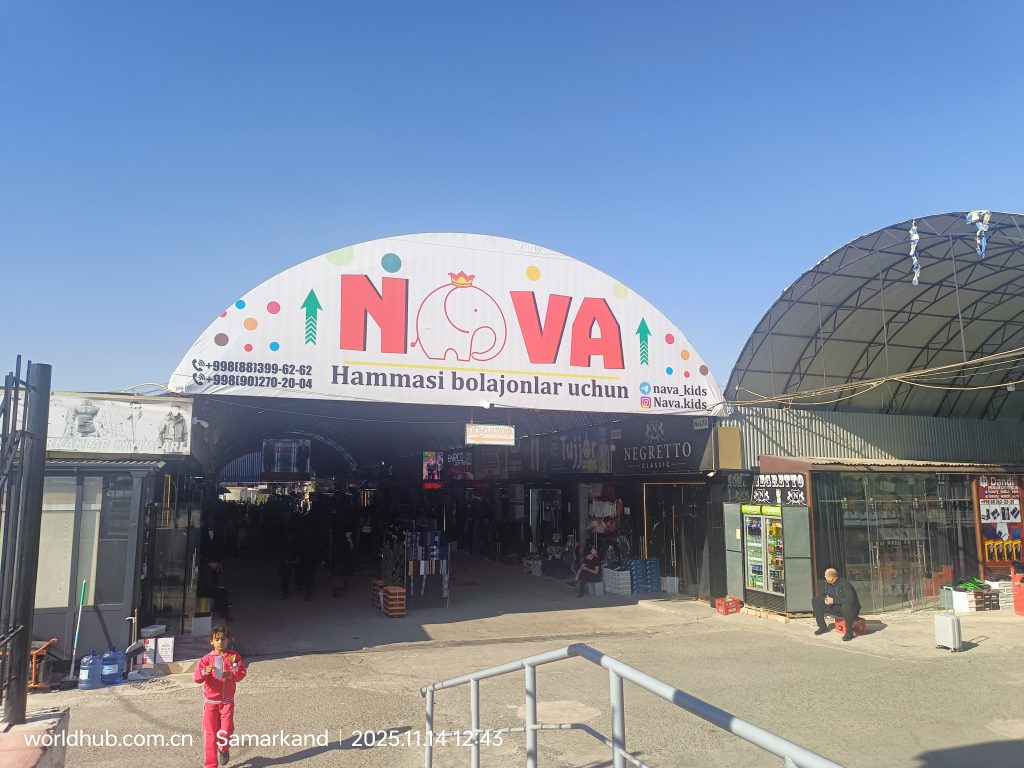
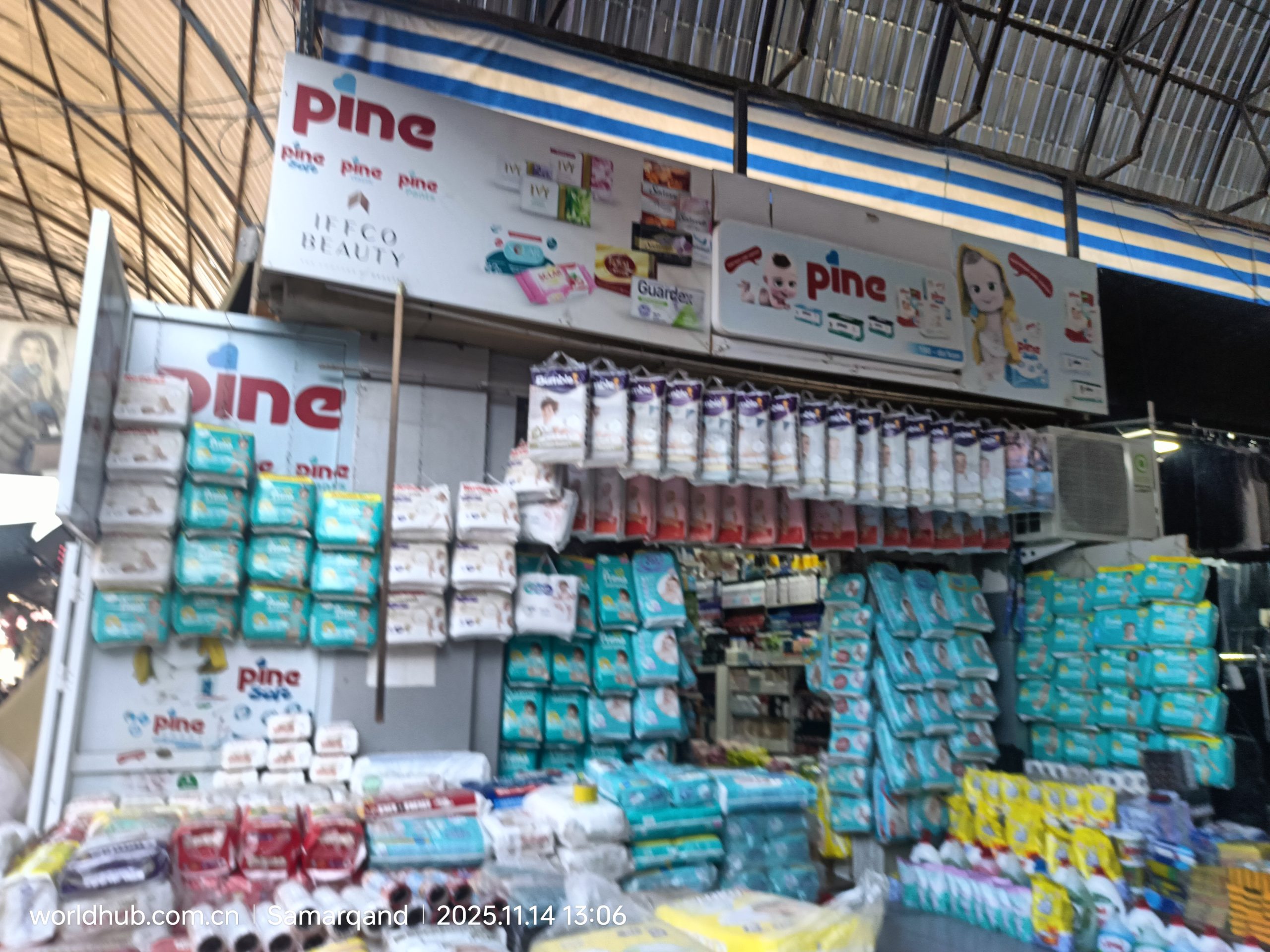
During the investigation of women’s underwear and shoe stores, it was found that local products have conservative styles and single designs, mostly basic models. The fabrics are mostly ordinary cotton and synthetic fibers, lacking functional fabrics and fashionable designs. In terms of price, the price of medium-quality women’s underwear is about 80-150 RMB, and the price of shoes is between 200-500 RMB, which is higher than that of similar products in China. Daily necessities in supermarkets are mainly local brands and imported products from Russia and Turkey, covering categories such as toiletries, food, and household cleaning products, but the brand choices are limited, and some imported products have relatively high prices.
(III) Office Supplies Market
Office supplies stores in Samarkand mainly supply basic stationery such as notebooks, quick-drying pens, pencils, and gel pens. Most of the products are locally produced or imported from neighboring countries, with uneven quality, and the writing fluency and durability need to be improved. Among them, the price of ordinary notebooks is about 15-30 RMB, and the unit price of gel pens is 5-10 RMB, which is less cost-effective compared to similar products in China. The store owners said that the local demand for office supplies is stable, especially the purchase volume of small and medium-sized enterprises and schools is relatively large, but the supply of high-quality products is insufficient and the procurement channels are relatively single.


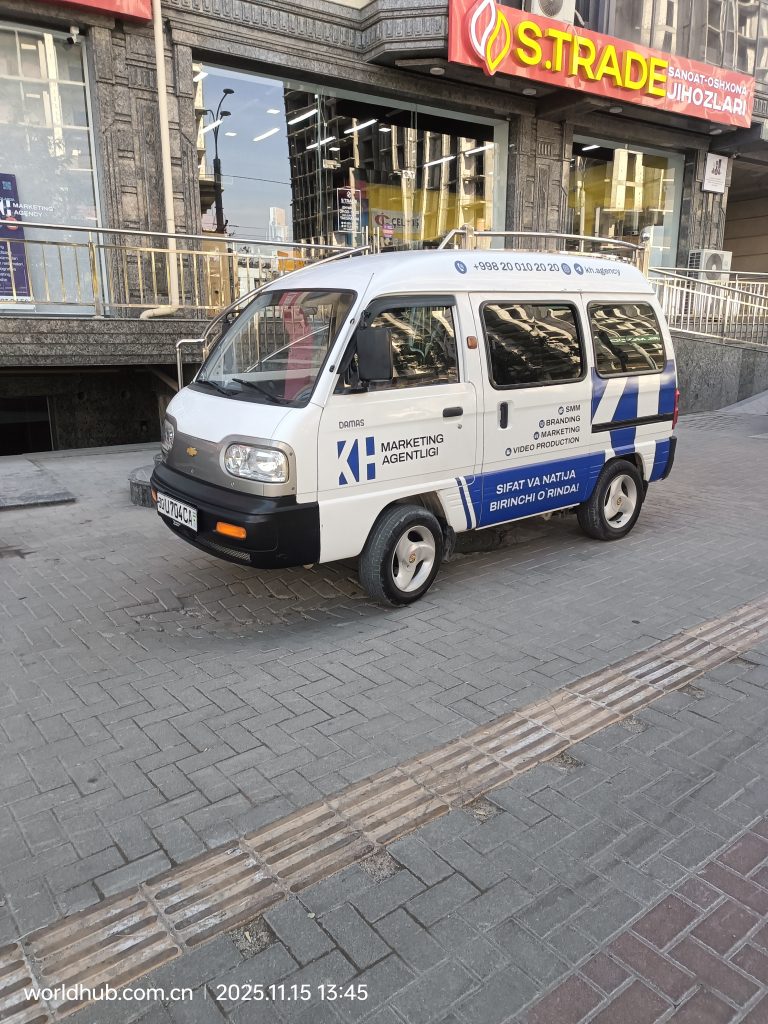
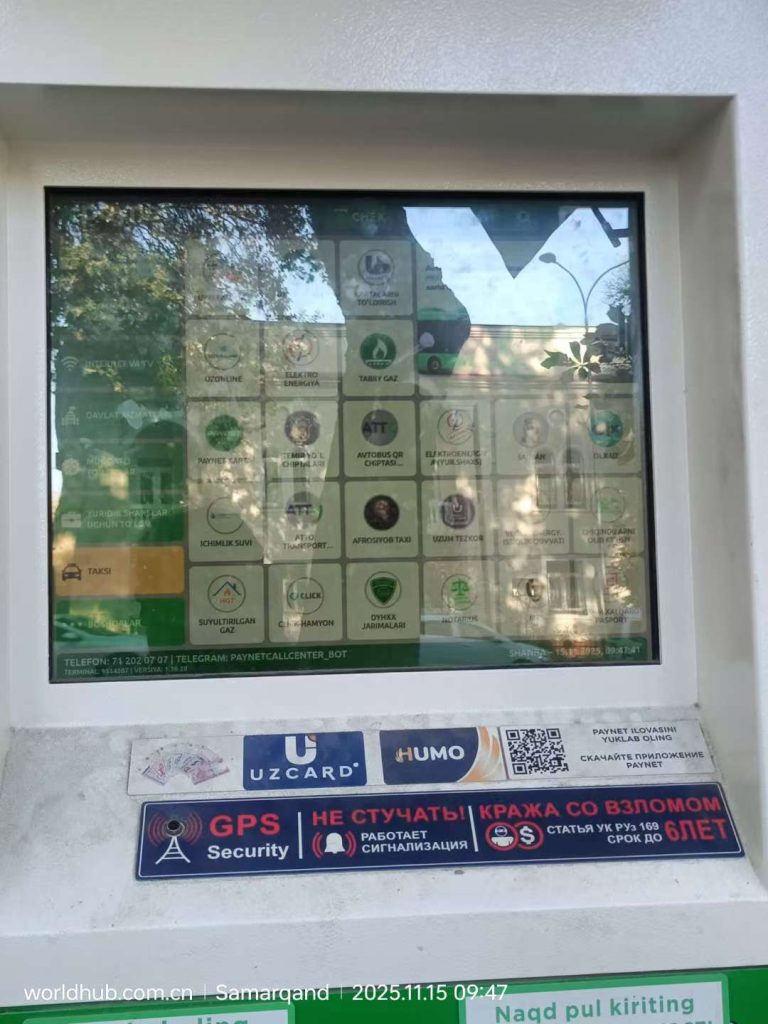
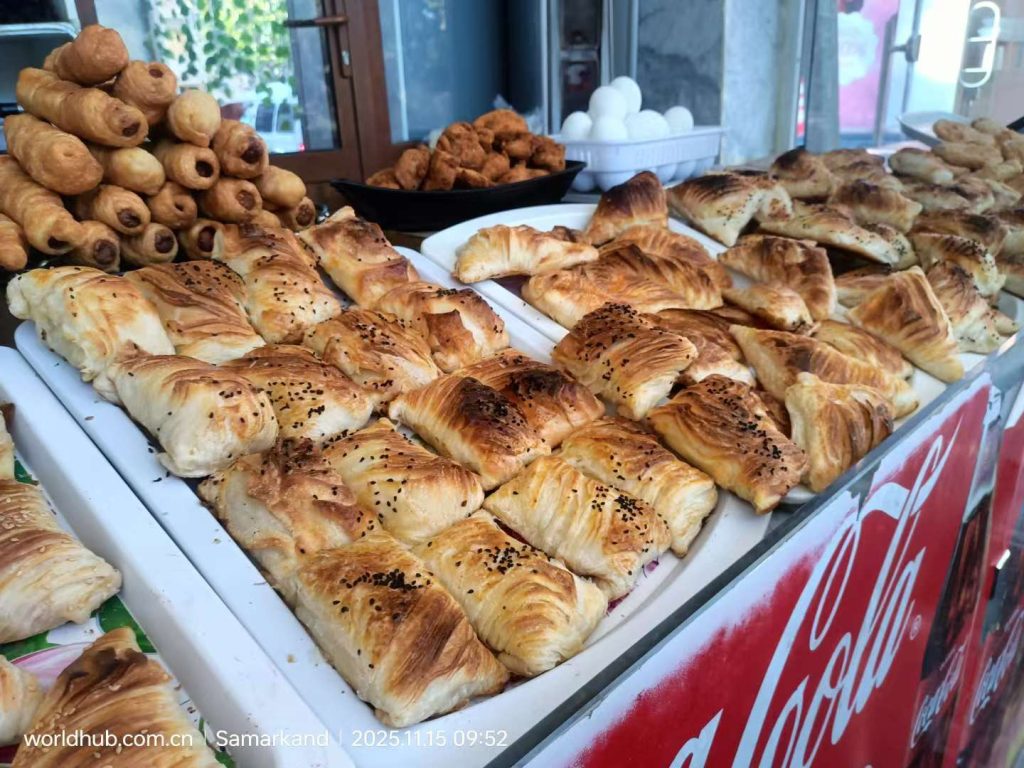
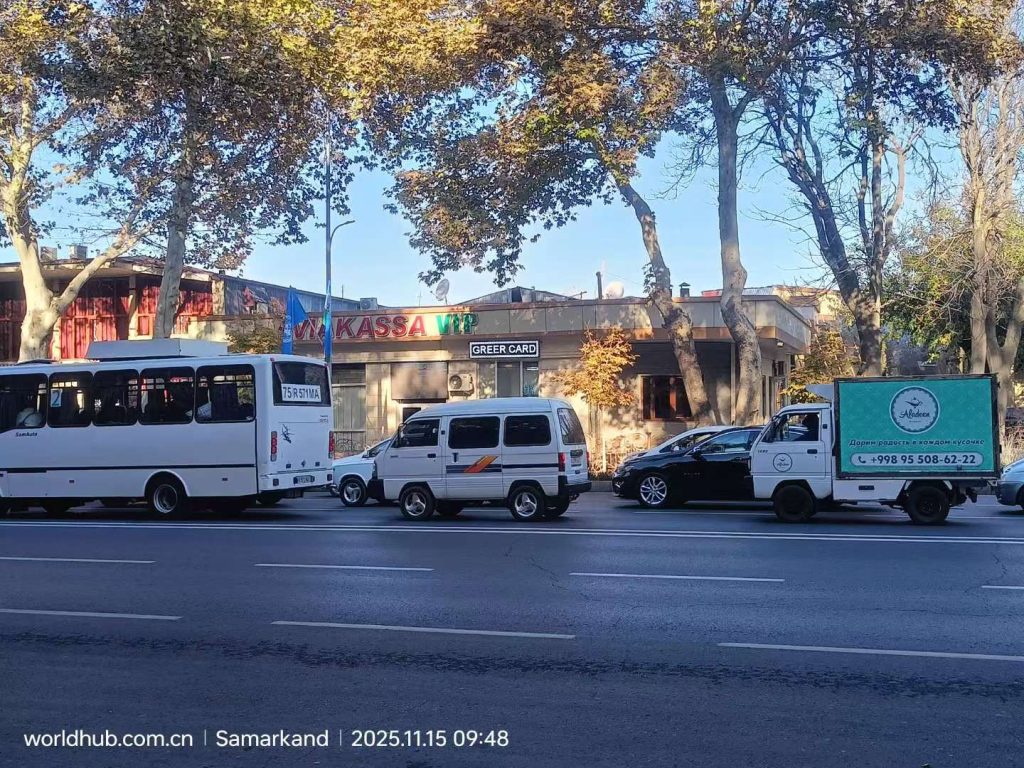
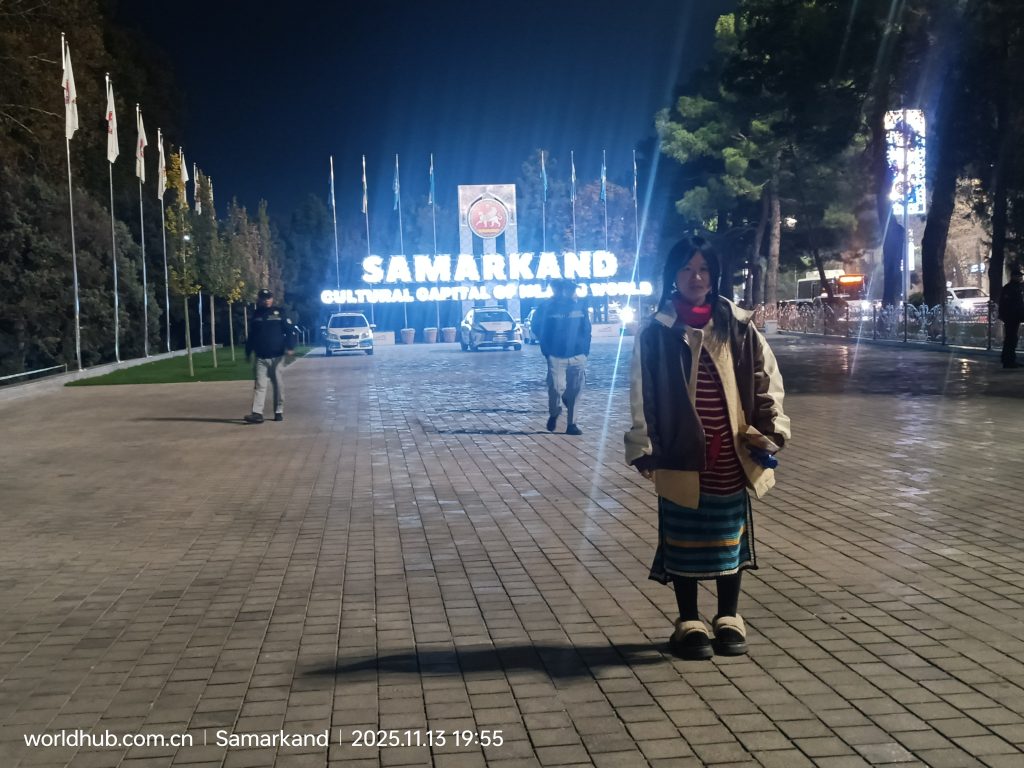
My Chinese friend helped me distribute the company’s flyers(Samarkhand City, Uzbekstan)
(IV) Platform Promotion and Feedback
During the investigation, I introduced the core advantages of the WorldHub e-commerce platform in detail to merchants of various categories and some consumers: First, it has a rich variety of products, which can make up for the shortage of high-quality commodity supply in the local market. Whether it is fashionable underwear, intelligent office supplies, or high-quality building materials and tools, they can all be purchased through the platform. Second, it has obvious price advantages. The platform connects directly with manufacturers, which can effectively reduce intermediate links, solve the problem of high prices of imported products in the local market, and the gross profit margin of some categories can exceed 100%. Third, logistics and payment are convenient. The platform has built a logistics network covering Central Asia, supporting localized payment methods such as installment payment and payment after receipt, which is in line with Uzbekistan’s 38% online shopping penetration rate and installment payment consumption habits. Fourth, it supports small and medium-sized enterprises to expand the market. The threshold for merchants to settle in is low, and they can use the platform to sell local characteristic products to the world. Just like 17,000 entrepreneurs on Uzum Market, they can achieve national and even cross-border sales.
Most merchants showed a positive attitude towards the platform, especially office supplies stores and hardware and electrical merchants, who asked about the entry conditions, commission ratio, and logistics timeliness one after another. Some consumers also expressed expectations for high-quality Chinese products on the platform, hoping to purchase daily necessities and clothing with novel designs and high cost-performance ratio through the platform. At the same time, I also collected valuable suggestions. Merchants generally paid attention to logistics delivery speed and after-sales guarantee, while consumers hoped that the platform would provide a multilingual interface and local customer service support. These feedbacks provided important references for the subsequent optimization of the platform.
IV. Research Summary
This market research in Samarkand lasted for six days. Through on-site visits to multiple scenarios such as accommodation, catering, retail, and building materials, I deeply felt the commercial vitality and market potential of this ancient Silk Road city. As an important tourist and commercial city in Uzbekistan, Samarkand not only has rich historical and cultural resources but also has a growing consumer demand. Especially with a high proportion of young people and the gradual formation of online shopping habits, it provides fertile soil for the development of e-commerce. If the WorldHub platform can combine with local market characteristics, optimize the logistics, payment, and customer service systems, and accurately connect the supply and demand gap, it is expected to occupy a place in this emerging market. In the follow-up, we can focus on following up the entry of interested merchants, optimize the product categories according to local needs, and promote the continuous expansion of the platform in the Central Asian market.