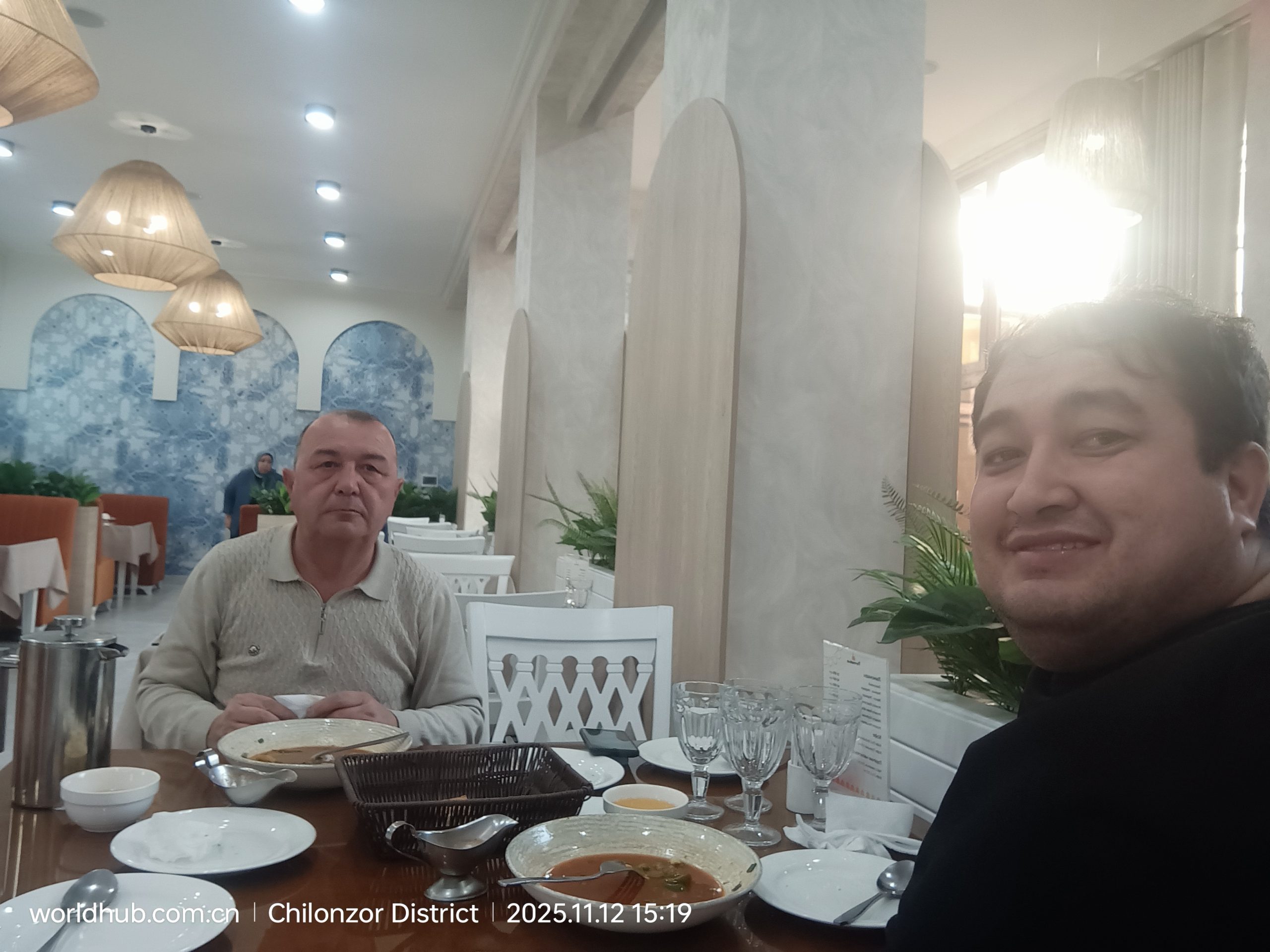
During my in-depth market development in Uzbekistan, I have made many sincere and enthusiastic businessman friends. They run shops in different cities across the country — some are rooted in the core markets of Tashkent, while others stick to the ancient streets and alleys of Samarkand. Although they are busy with their livelihoods on a daily basis, they never forget to care about each other. This friendship that transcends cities makes me feel extremely warm in a foreign land.
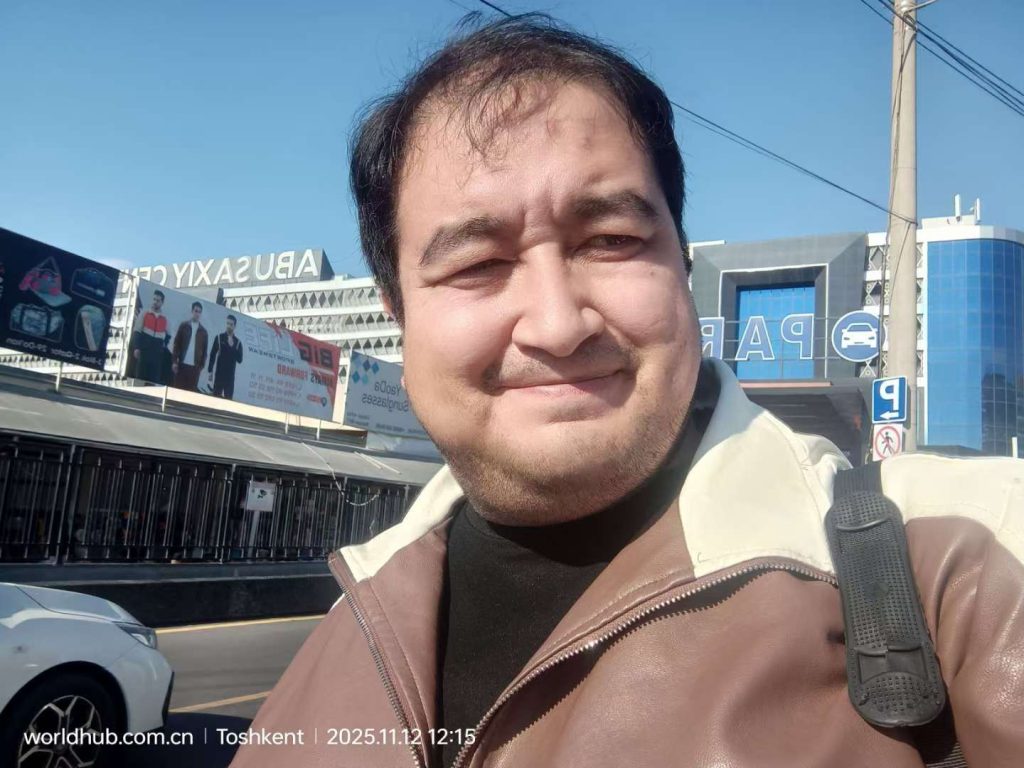
I AM MR AOSIMAN TUOHESUN FROM ZEPU COUNTY,XINJIANG,CHINA,COMPANY AT YIWU CITY ,ZHEJIANG PROVINCE。
At 4 p.m. on November 12, 2025, when I had just finished my inspection of Abu Sahiy Market and was standing by the main road in front of the market sorting out promotional leaflets and inspection notes, my phone suddenly rang. The familiar name “Baktiyar” popped up on the screen. This old friend who has been doing business in Samarkand all year round greeted me with a hearty smile as soon as he opened his mouth, and enthusiastically invited me in Uzbek mixed with Chinese: “Brother, come to Samarkand as my guest! I have arranged a driver to pick you up. He will be at the entrance of Abu Sahiy Market soon, please wait a moment!” After hanging up the phone, warmth surged in my heart immediately. I quickly packed my personal belongings and waited quietly by the road.
Before long, a clean and tidy car slowly pulled over. The car window rolled down, and the man in the driver’s seat waved at me with a smile, his eyes full of kindness. He was Kamal, the driver arranged by Baktiyar. Seeing me get in the car, he said to me in slightly stiff but extremely sincere Chinese: “Hello! I’m Kamal, specially here to pick you up to Samarkand!” Considering that the upcoming journey would be quite long, Kamal suggested that we first go to a nearby restaurant to rest for a while and have something to eat before setting off. Unable to refuse his kind offer, I followed him into a local restaurant hidden in an alley next to the market.
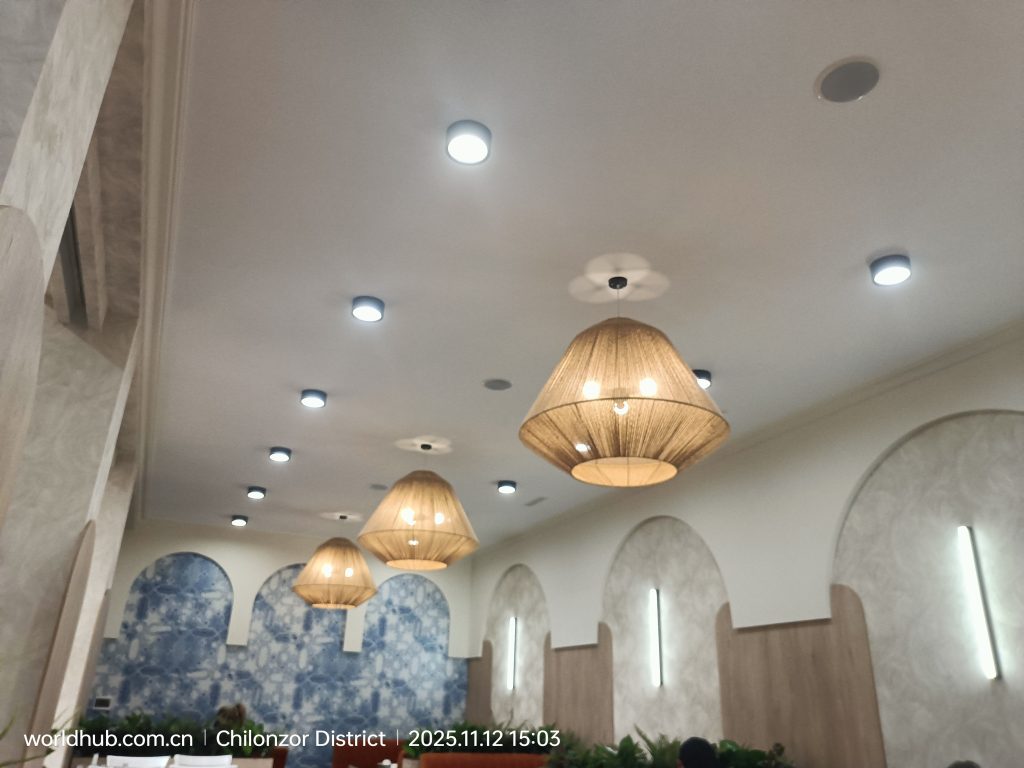
Although the restaurant was inconspicuous in appearance, its interior environment was quite elegant. Warm yellow lights gently shrouded the wooden tables and chairs, and the air was filled with the wheat aroma of samsa (Uzbek baked buns), the sauce fragrance of lagman (hand-pulled noodle soup) and the rich scent of spices, which instantly aroused my appetite. What was even more considerate was that as soon as I walked into the restaurant, I saw a specially set-up hand-washing area with hand sanitizer, clean towels and clean water, perfectly in line with the traditional habit of Uzbeks washing their hands before meals. Kamal and I found a window seat and sat down. He enthusiastically recommended local specialty dishes to me. In the end, we unanimously chose the classic lagman and samsa, and also ordered a pot of warm Uzbek black tea.
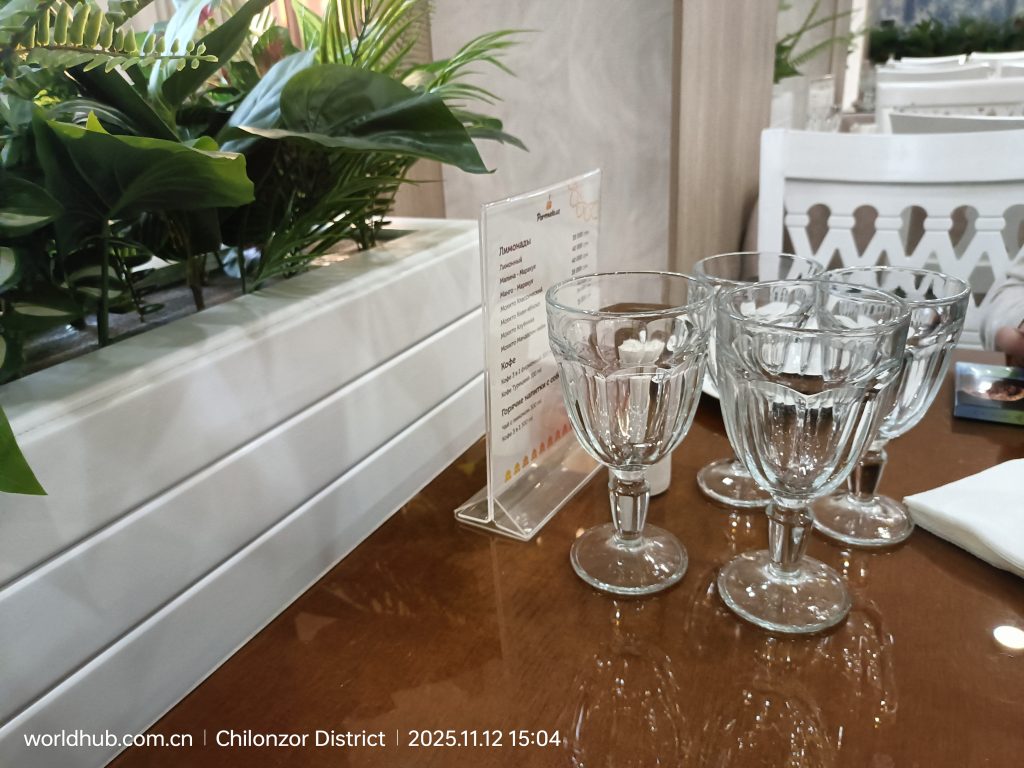
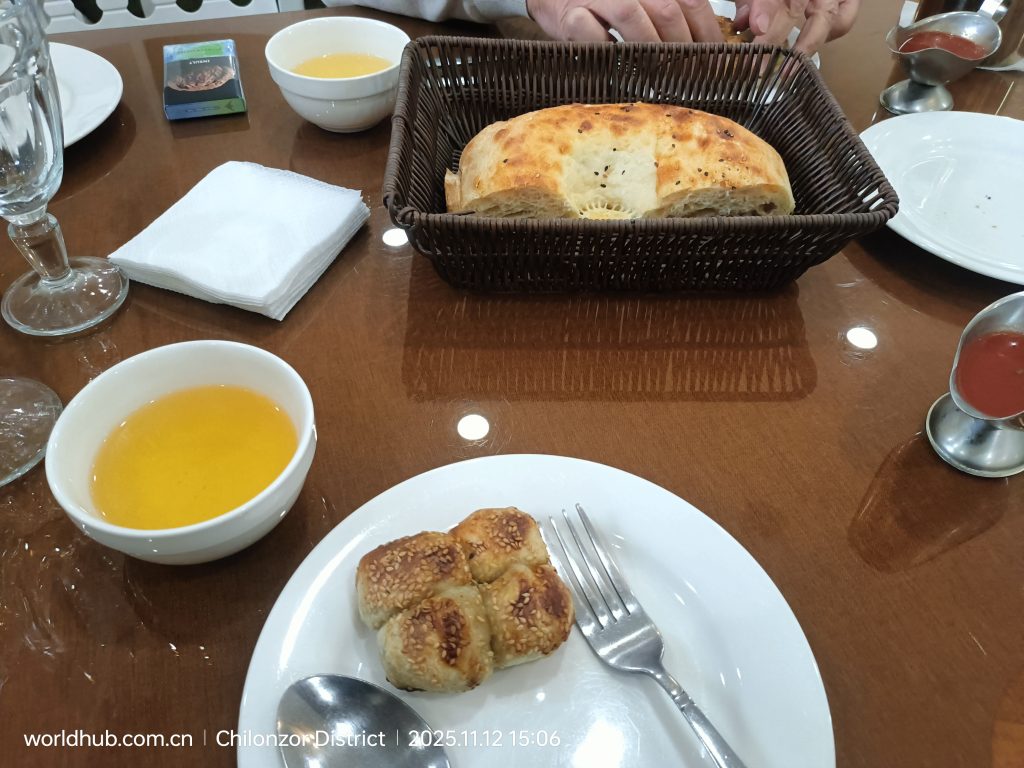
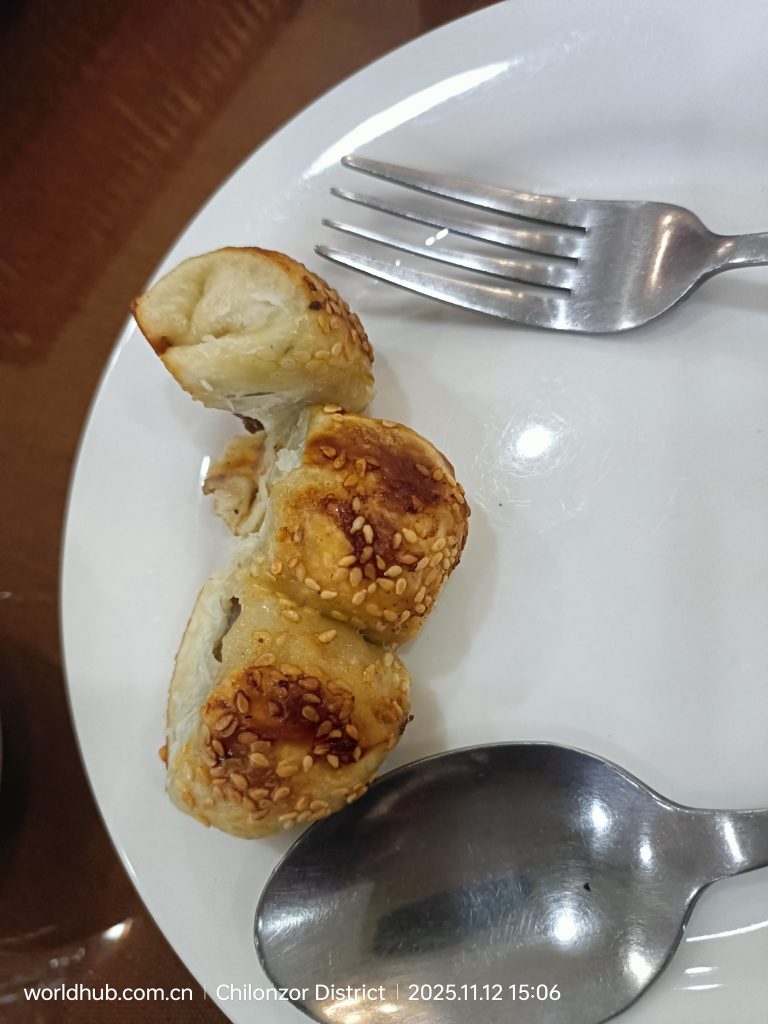
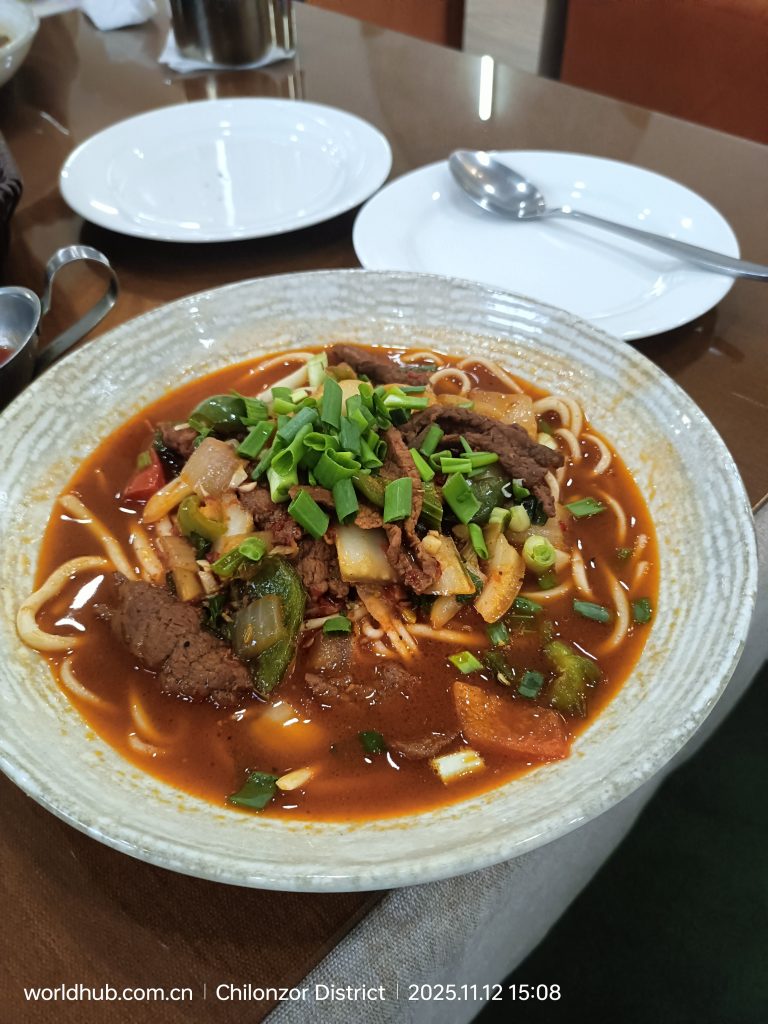
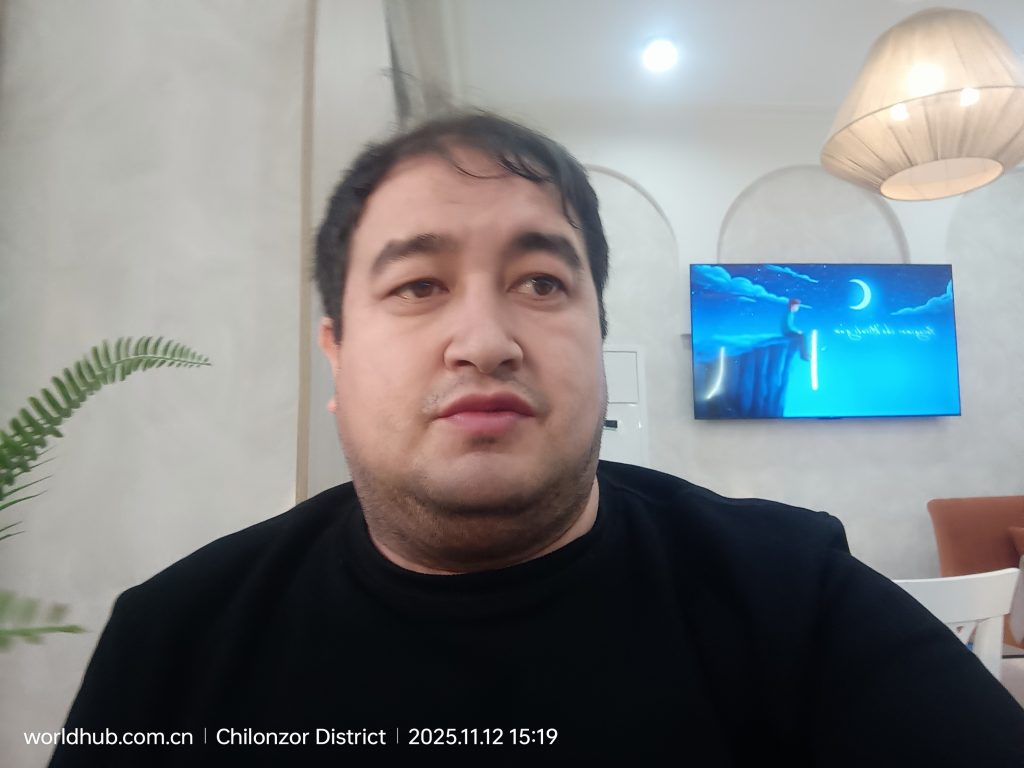
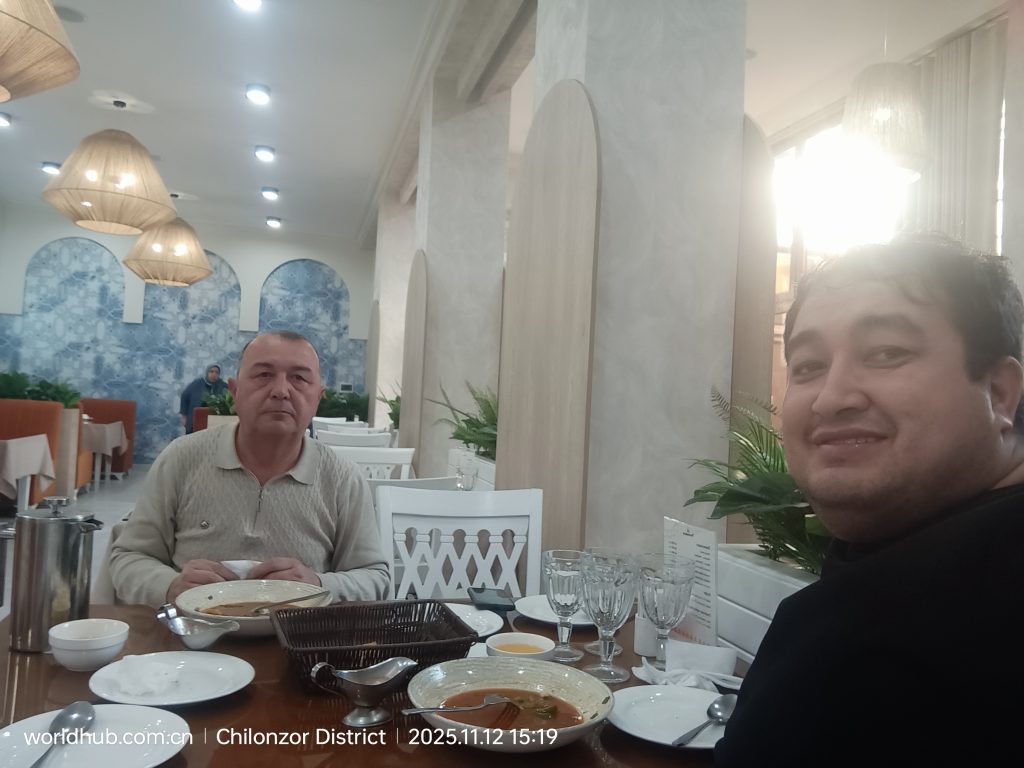
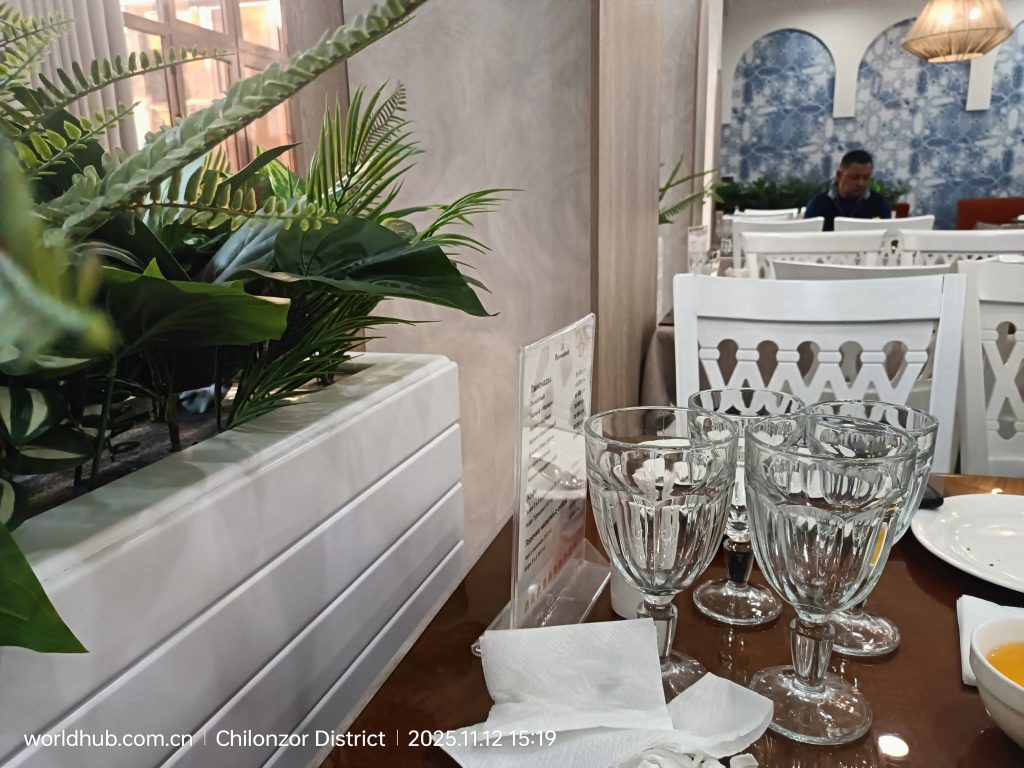
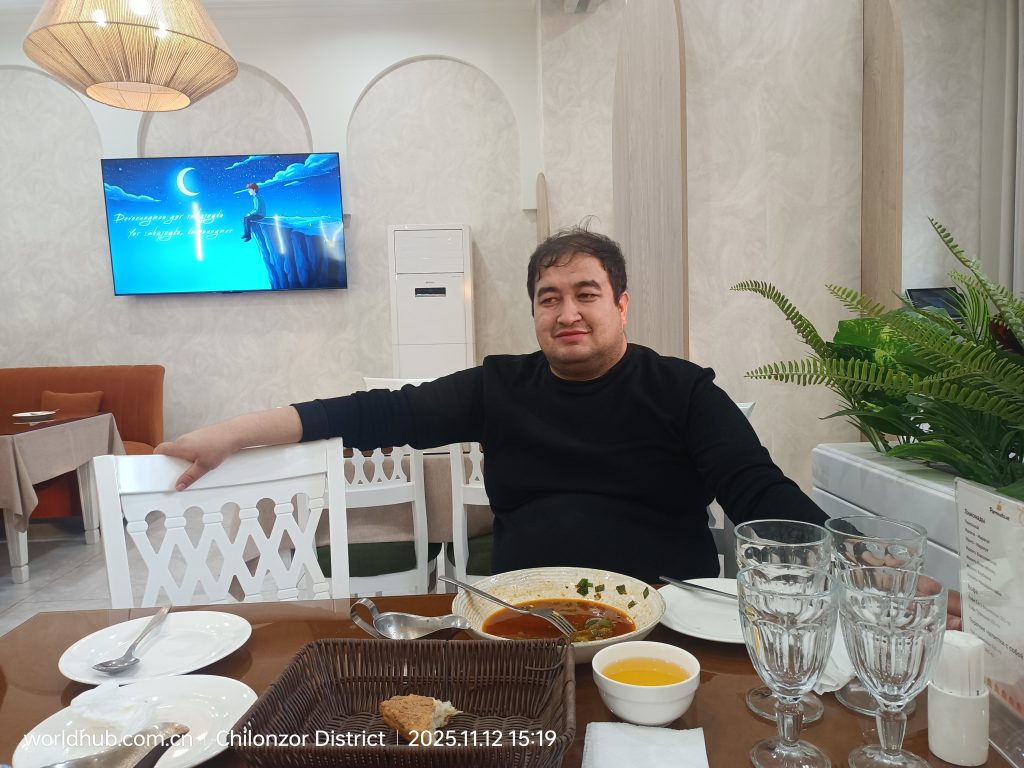
After a short while, the food was served one after another. The attractive-looking lagman was wrapped in rich tomato and lamb sauce, with chewy and smooth noodles, paired with tender lamb slices and green bell pepper strips — one bite was full of fresh and savory flavor. The freshly baked samsa had a golden and crispy outer skin; it crumbled easily with a light bite, and the hot air mixed with the aroma of the tender meat filling rushed towards my face, salty and delicious, becoming more flavorful as I chewed. While eating heartily, we chatted casually. Kamal smiled and told me that he was not only a driver, but also a good friend of Baktiyar. He had lived in Russia for many years and had learned three languages: Turkish, Russian and Uzbek, which made him a real “language expert”.
After eating and drinking our fill, we got up and set off for Samarkand. The distance from downtown Tashkent to Samarkand is about 300 kilometers. As night fell, the car slowly drove out of the urban area and rushed towards the destination. Along the way, Kamal opened up and told me many stories about himself in Chinese mixed with English — he talked about his years of struggling in Russia and the local customs and traditions there; he spoke of the markets and food in Turkey, his eyes full of longing; he also chatted about the traditional culture of Uzbekistan, from the ancient buildings of Samarkand to the living customs of the local people. These vivid stories made the long journey extremely interesting.
The scenery along the way gradually changed from urban street views to open farmland and Gobi desert in the suburbs. The starry sky at night was particularly bright, and the evening breeze blew in through the car window, bringing a touch of coolness and comfort. It is worth mentioning that I have been in Uzbekistan for some time this time. Whether on the streets of Tashkent or the highways along the way, I have never seen a single traffic accident. The vehicles drive in an orderly manner, and all drivers abide by traffic rules, making the ride smooth and safe. This good traffic order made me feel very at ease.
Kamal drove the car attentively, and occasionally chatted with me a few words to relieve fatigue. We talked about language and culture, market conditions, life anecdotes and business insights. The sense of distance that originally existed between strangers had long disappeared. Chatting freely all the way, we rushed forward, and after nearly 3.5 hours of driving, we finally slowly entered downtown Samarkand at around 11 p.m. that night. Samarkand at night was quiet and solemn, and the outlines of the ancient buildings in the distance loomed under the lights, as if quietly welcoming my arrival. This sudden invitation and this warm journey not only made me feel the hospitality of my Uzbek friends, but also, thanks to Kamal’s company and sharing along the way, this 300-kilometer trip has become one of my most precious memories in Uzbekistan.
Key Translation Notes (Ensuring Accuracy and Cultural Adaptability)
Proper Noun Standardization:
- Lagman: Official and common English name for stir-fried hand-pulled noodles in Uzbekistan, distinguishing it from ordinary “noodle”; supplementary annotation aids understanding.
- Samsa: Standard translation in Central Asia, avoiding confusion with Indian “samosa”; marked with “Uzbek baked buns” for better comprehension.
- Abu Sahiy Market / Baktiyar / Kamal: Retain original names (following the principle of “unchanged transliteration” for personal and place names, conforming to international translation conventions).
Detail and Logic Optimization:
- “In-depth market development”: Accurately reflects the professionalism of business inspections, instead of simple “living”.
- “3.5 hours”: Common written expression; “11 p.m. that night”: In line with English time expression habits.
Cultural Scene Supplement:
- “Uzbek black tea”: Clarified as the mainstream tea type in the region (not green tea/herbal tea).
- Supplementary explanation “in line with the traditional habit of Uzbeks” when translating “pre-meal hand-washing area”, helping English readers understand the cultural significance of the design.
Language Proficiency Description:
- “Language expert”: Natural and not rigid, fitting colloquial context; three languages “Turkish, Russian and Uzbek” clearly listed, consistent with the original information.