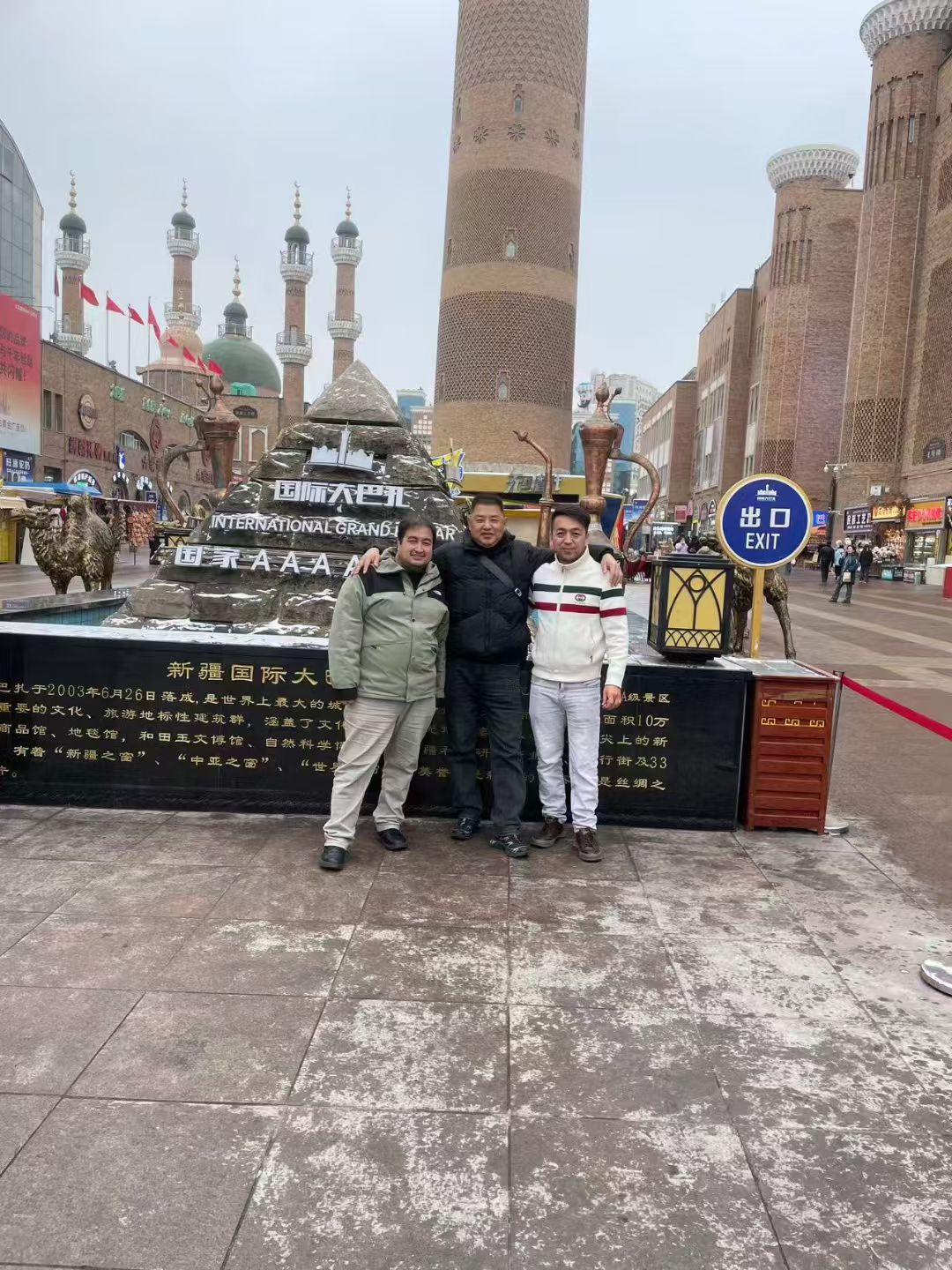
两位来自浙江义乌、长期深度从事小商品贸易的朋友于前天抵达乌鲁木齐。此次访问旨在现场视察新疆及周边中亚市场线下渠道布局,为双方随后基于世界枢电商平台的跨境批发合作奠定坚实基础。作为专注于中亚市场发展的从业者,我全程陪同两位商户,花了一整天深入参观乌鲁木齐的两个核心商业地标——国际大市集和华岭布料市场。通过与线下商家的面对面沟通和谈判,我们系统地调查了本地商品销售现状、质量控制标准和市场合作潜力,为世界枢纽平台搭建了连接义乌供应链与中亚线下零售终端的关键沟通桥梁。
早上,我们先去了乌鲁木齐国际大市。作为新疆最大、最具代表性的综合国际贸易市场,它不仅是本地文化与商业融合的核心,也是向中亚、西亚乃至欧洲辐射的重要商品分销中心。它汇聚了数千家线下门店,涵盖家用品、纺织品和织物以及特色手工艺品等多种商品,其中有许多面向中亚商户的批发店,这与worldhub平台的全球批发定位高度契合。访问期间,我们随机挑选了10多家主要从事日常用品和家用清洁用品的门店,并与店主和采购经理进行了深入的面对面交流。我们重点询问了这些门店的月销售量——了解到,面向中亚出口的门店月批发量一般在500到2件之间。其中,破布和清洁布等需求较强的品类因适应中亚家庭和餐饮场景而保持销售领先。同时,我们也详细了解了商品质量标准。本地商家通常注重成本效益,要求商品符合国家基本质量检验标准。一些专注于中高端市场的门店还会推出环保材料(如棉、亚麻、可降解纤维),以满足中亚中产阶级的质量需求。此外,我们还与商家就采购渠道、批发价格和物流时效等核心合作问题进行了沟通,发现大多数线下门店仍依赖传统供应链,存在单一采购和价格大幅波动等问题。这也凸显了worldhub平台在连接义乌高质量供应链和整合线下渠道方面的合作价值。
Two friends from Yiwu, Zhejiang, who have long been deeply engaged in the small commodity trade, arrived in Urumqi the day before yesterday. Their visit aimed to conduct an on-site inspection of the offline channel layout in Xinjiang and surrounding Central Asian markets, laying a solid foundation for the subsequent cross-border wholesale cooperation between both parties relying on the WorldHub e-commerce platform. As a practitioner focusing on Central Asian market development, I accompanied the two merchants throughout the entire process, spending a whole day conducting in-depth visits to two core commercial landmarks in Urumqi——the International Grand Bazaar and Hualing Rag Market. Through face-to-face communications and negotiations with offline merchants, we systematically investigated the current status of local commodity sales, quality control standards, and market cooperation potential, building a key communication bridge for the WorldHub platform to connect Yiwu’s supply chain with Central Asian offline retail terminals.
In the morning, we first went to Urumqi International Grand Bazaar. As the largest and most representative comprehensive international trade market in Xinjiang, it is not only the core of integration of local culture and commerce but also an important commodity distribution center radiating Central Asia, West Asia, and even Europe. It gathers thousands of offline stores, covering various commodities such as household goods, textiles and fabrics, and characteristic handicrafts, among which there are many wholesale stores targeting Central Asian merchants, which is highly consistent with the global wholesale positioning of the WorldHub platform. During the visit, we randomly selected more than 10 stores mainly engaged in daily necessities and household cleaning products, and conducted in-depth face-to-face communications with store owners and purchasing managers. We focused on inquiring about the monthly sales volume of the stores——it was learned that the monthly wholesale volume of stores focusing on exports to Central Asia generally ranges from 500 to 2,000 pieces. Among them, rigid-demand categories such as rags and cleaning cloths have maintained a leading sales volume due to their adaptability to Central Asian family and catering scenarios. At the same time, we also learned in detail about commodity quality standards. Local merchants generally pay attention to cost-effectiveness and require commodities to meet national basic quality inspection standards. Some stores focusing on the mid-to-high-end market will additionally introduce environmentally friendly materials (such as cotton and linen, degradable fibers) to meet the quality needs of the Central Asian middle class. In addition, we also communicated with merchants on core cooperation issues such as sourcing channels, wholesale prices, and logistics timeliness, and found that most offline stores still rely on traditional supply chains, with problems such as single sourcing and large price fluctuations. This also highlights the cooperative value of the WorldHub platform in connecting Yiwu’s high-quality supply chain and integrating offline channels.


下午,我们去了乌鲁木齐华岭抹布市场——西北地区一个极具影响力的专业清洁用品批发市场。它汇聚了数百家线下批发商和抹布及家用清洁用品制造商。其产品不仅覆盖新疆本地市场,还通过边境贸易出口到哈萨克斯坦和乌兹别克斯坦等中亚国家,使其成为中亚清洁产品线下渠道检查的核心基地。在市场中,我们重点联系了5家大型线下批发商,通过现场检查样品、审查销售账簿以及与管理者面对面谈判,准确把握了市场动态。在销售量方面,主要批发商的月批发量可超过<>件。其中,纯色纯棉抹布和超细纤维清洁布在中亚商户中最为流行,主要销售到乌兹别克斯坦塔什干和哈萨克斯坦阿拉木图等城市的线下超市和批发市场。在质量控制方面,市场上所有商户都必须提供产品质量检验报告,一些商户还建立了三阶段质量检验流程(前期、在生产、后期),以确保商品符合中亚国家的进口标准。同时,针对中亚干燥气候,一些商家也优化了抹布的吸水性和耐用性,以提升产品的适应性。
这次与义乌朋友的全天访问和视察,不仅让义乌商户直观地了解了乌鲁木齐线下市场的销售规模、质量标准和合作潜力,也使我们能够准确捕捉中亚线下零售渠道的核心需求——他们不仅需要符合基本质量标准的性价比高硬性商品,更迫切需要多元化和高质量的供应链支持。通过面对面沟通,我们初步与3家线下门店达成合作意向,计划通过worldhub平台连接义乌的高品质资源,弥补本地商户供应链的不足。同时,我们也收集了中亚市场清洁用品如抹布的具体需求参数,为优化worldhub平台商品选择提供了第一手数据,并提升未来平台与中亚线下渠道的适应性。展望未来,我们将继续深化与义乌供应链及乌鲁木齐线下商户的合作,依靠worldhub平台开通“义乌供应源-乌鲁木齐中亚中枢”跨境批发链路,帮助更多高品质商品高效进入中亚市场,推动跨境贸易合作质量和效率提升。
In the afternoon, we went to Urumqi Hualing Rag Market——a highly influential professional wholesale market for cleaning products in the northwest region. It gathers hundreds of offline wholesalers and manufacturers of rags and household cleaning products. Its products not only cover the local Xinjiang market but also are exported to Central Asian countries such as Kazakhstan and Uzbekistan through border trade, making it a core site for inspecting offline channels of cleaning products in Central Asia. In the market, we focused on connecting with 5 large-scale offline wholesalers, and accurately grasped market dynamics by on-site inspection of samples, reviewing sales ledgers, and face-to-face negotiations with managers. In terms of sales volume, during the peak season (March to October every year), the monthly wholesale volume of rags of leading wholesalers can exceed 5,000 pieces. Among them, solid-color pure cotton rags and microfiber cleaning cloths are most popular among Central Asian merchants, mainly sold to offline supermarkets and wholesale markets in cities such as Tashkent, Uzbekistan, and Almaty, Kazakhstan. In terms of quality control, all merchants in the market are required to provide product quality inspection reports, and some merchants have also established a three-stage quality inspection process (pre-production, in-production, and post-production) to ensure that commodities meet the import standards of Central Asian countries. At the same time, in response to the dry climate in Central Asia, some merchants have also optimized the water absorption and durability of rags to improve product adaptability.
This full-day visit and inspection with friends from Yiwu not only allowed Yiwu merchants to intuitively understand the sales scale, quality standards, and cooperation potential of Urumqi’s offline market but also enabled us to accurately capture the core needs of Central Asian offline retail channels——they not only need cost-effective rigid-demand commodities that meet basic quality standards but also urgently require diversified and high-quality supply chain support. Through face-to-face communications, we have initially reached cooperation intentions with 3 offline stores, planning to connect high-quality sources from Yiwu through the WorldHub platform to make up for the supply chain shortcomings of local merchants. At the same time, we have also collected specific demand parameters for cleaning products such as rags in the Central Asian market, providing first-hand data for optimizing the commodity selection of the WorldHub platform and improving the adaptability between the platform and Central Asian offline channels in the future. Going forward, we will continue to deepen cooperation with Yiwu’s supply chain and Urumqi’s offline merchants, relying on the WorldHub platform to open up the cross-border wholesale link of “Yiwu supply sources – Urumqi transit – Central Asian retail”, helping more high-quality commodities enter the Central Asian market efficiently and promoting the quality and efficiency improvement of cross-border trade cooperation.