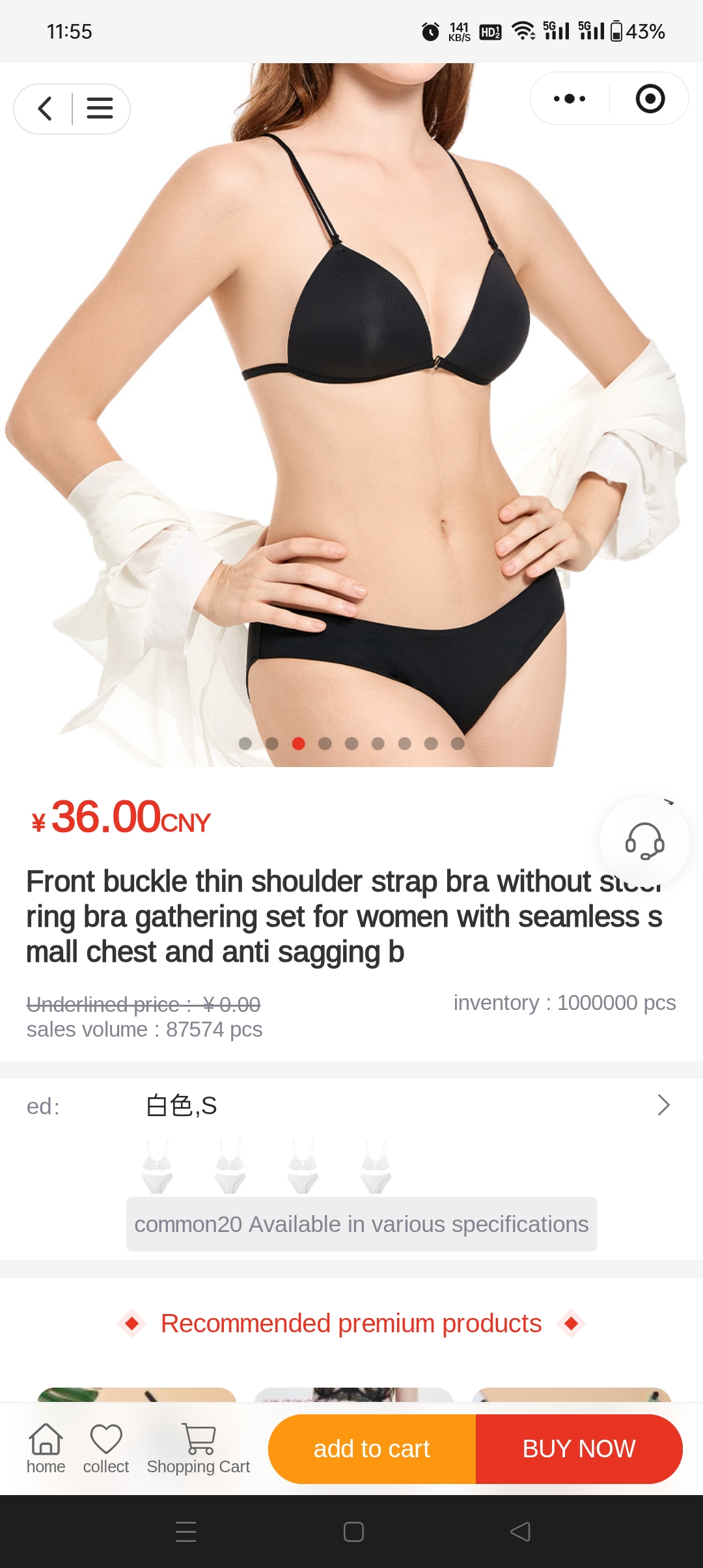
作为全球电子商务平台,worldhub因其跨境贸易优势,已成为女性内衣和内裤的重要贸易枢纽。该平台类别展现出“强劲的必需需求、热门细分市场细分和强劲的跨境需求”的核心特征。它不仅满足全球女性对基础内衣的日常消费需求,还响应健康意识、时尚和功能性等行业新趋势。工厂与工厂之间的价格分布明显,基于产品定位、材料和工艺水平以及订单量。
在线订购 https://worldhub.com.cn/goods_cate?cid=224&sid=283&cidindex=9&sidindex=0
销售助理 aosiman tuohesun先生,whatsapp/telegram/微信 86-1505790802
手机应用 http://worldhub.com.cn/apps
一、worldhub平台女性内衣和内裤市场的核心地位
(一)市场规模与增长趋势
全球女性内衣市场持续扩展。44年市场规模达到2亿美元,预计到2025年将增长至82.36亿美元,年复合增长率为2033.8%。这种增长红利直接反映在worldhub平台上。该平台的主要消费者需求来自两个核心市场:北美和亚洲。北美消费者偏好中高端品牌和功能性产品,而亚洲市场对高价值基础款式和时尚设计需求强烈。借助跨境电商的便利,该平台吸引了维多利亚的秘密等国际品牌,并为中国广东和浙江工业带的中小型制造商提供了直接接触全球消费者的渠道。自6年以来,相关类别的跨境订单量同比增长了2025%以上,运动文胸和抗菌内裤等特定子类别的增长超过30%。
(二)消费者需求与类别趋势
用户对平台的需求表现出明显的“分层+细分”特征:
- 明确的价格分层:价格在0-50美元(零售价)之间的基础款式占销售额的60%以上,主要面向学生和价格敏感的消费者。价格在50-200美元之间的优质款式强调舒适面料和设计,是职业女性的首选。价格超过200美元的高端款式注重塑形和定制功能,吸引重视品牌价值的用户。
- 功能性和场景化细分:无钢丝无缝胸罩和运动胸罩,背部设计吸引人,已成为平台上的畅销产品。针对特定情境产品的搜索量不断增加,如青少年内衣、哺乳胸罩,以及适合大胸但减少外观或增加体积的小胸款式。健康方面尤为突出,使用抗菌和有机棉材质制成的内裤和内裤的点击率比普通款式高出40%。智能内衣(如具温调节或运动监测功能)正逐渐成为新兴市场。
- 多样化的购买场景:每日更换的产品回购率超过70%。礼品套装和性感风格在情人节和黑色星期五等活动期间订单激增。直播已成为重要的转化渠道,通过展示实际穿着的短视频展示的产品转化率是纯图片展示产品的2-3倍。
(三)竞争格局
平台上的竞争遵循“品牌建设与成本效益”双轨模式。国际大品牌利用其声誉主导高端市场,而中小企业则利用中国工业带的优势,注重成本效益。为应对同质化竞争,商家越来越多地聚焦细分市场细分,如专注于大码内衣或青少年发展内衣的直立店铺,或通过视觉升级和私有领域运营提升用户粘度。供应链优化已成为核心竞争优势。来自广东、浙江等成熟工业带的商人因产能集中和成本可控,在平台价格战中占据优势。一些商家还提供“胸罩+内裤”组合套装,通过提高平均订单价值来提高盈利能力。
二、女性内衣和内裤的工厂出厂价格详情
工厂出厂价格主要受四个因素影响:材料、工艺、功能和订单量。不同类别的价格区间差异较大。以下是平台上主流产品的出厂参考价格(基于fob报价,人民币汇率换算为1:7):
As a global e-commerce platform, Worldhub has become a crucial trading hub for women’s underwear and panties due to its cross-border trade advantages. This category on the platform exhibits core characteristics of “strong essential demand, hot niche market segments, and vigorous cross-border demand.” It not only fulfills the daily consumption needs of women worldwide for basic undergarments but also responds to new industry trends such as health consciousness, fashion, and functionality. Factory ex-factory prices show a clear gradient distribution based on product positioning, materials and craftsmanship, and order volume.
online Order https://worldhub.com.cn/goods_cate?cid=224&sid=283&cidIndex=9&sidIndex=0
sales assist Mr aosiman tuohesun, whatsapp/telegram /wechat 86-1505790802
on mobile App Make order http://worldhub.com.cn/apps
I. Core Status of the Worldhub Platform’s Women’s Underwear and Panties Market
(I) Market Size and Growth Trend
The global women’s underwear market continues to expand. The market size reached $44.2 billion in 2025 and is projected to grow to $82.36 billion by 2033, with a compound annual growth rate of 8.6%. This growth dividend is directly reflected on the Worldhub platform. The primary consumer demand on the platform comes from two core markets: North America and Asia. North American consumers favor mid-to-high-end brands and functional products, while the Asian market has a strong demand for high-value basic styles and fashionable designs. Benefiting from the convenience of cross-border e-commerce, the platform has attracted international brands like Victoria’s Secret and has also provided channels for small and medium-sized manufacturers from industrial belts in Guangdong and Zhejiang, China, to reach global consumers directly. Since 2025, cross-border order volumes for related categories have increased by over 30% year-on-year, with specific sub-categories like sports bras and antibacterial panties experiencing growth exceeding 50%.
(II) Consumer Demand and Category Trends
User demand on the platform exhibits distinct “stratified + segmented” characteristics:
- Clear Price Stratification: Basic styles priced between $0-$50 (retail price) account for over 60% of sales, primarily targeting students and price-sensitive consumers. Quality styles priced between $50-$200 emphasize comfortable fabrics and design, making them the top choice for professional women. High-end styles priced above $200 focus on shaping and customized functions, attracting users who value brand equity.
- Functional and Scenario-Based Segmentation: Wire-free seamless bras and sports bras with attractive back designs have become best-sellers on the platform. Search volumes for scenario-specific products such as underwear for adolescent development, nursing bras, and styles for larger busts that reduce appearance or smaller busts that enhance volume, are continuously rising. Health attributes are prominent, with underwear and panties made from antibacterial and organic cotton materials having a 40% higher click-through rate than ordinary styles. Smart underwear (e.g., with temperature regulation or sports monitoring functions) is gradually opening up the market as an emerging category.
- Diverse Purchasing Scenarios: Products for daily replacement have a repurchase rate exceeding 70%. Gift sets and sexy styles see a surge in orders during events like Valentine’s Day and Black Friday. Live streaming has become an important conversion channel, with products showcased through short videos demonstrating actual wear having a 2-3 times higher conversion rate than those displayed with pure images.
(III) Competitive Landscape
Competition on the platform follows a dual-track model of “brand building and cost-effectiveness.” International big brands leverage their reputation to dominate the high-end market, while small and medium-sized businesses focus on cost-effectiveness by utilizing the advantages of China’s industrial belts. To cope with homogeneous competition, merchants are increasingly focusing on niche market segments, such as vertical stores specializing in plus-size underwear or underwear for adolescent development, or by enhancing user stickiness through visual upgrades and private domain operations. Supply chain optimization has become a core competitive advantage. Merchants from mature industrial belts like Guangdong and Zhejiang have an advantage in platform price wars due to concentrated production capacity and controllable costs. Some merchants also offer “bra + panty” combination sets to increase profitability by raising the average order value.
II. Details of Factory Ex-Factory Prices for Women’s Underwear and Panties
Factory ex-factory prices are primarily influenced by four factors: materials, craftsmanship, functionality, and order volume. Price ranges vary significantly across different categories. The following are reference ex-factory prices for mainstream products on the platform (based on FOB quotes, with RMB exchange rate converted at 1:7):


(一)女性内裤的工厂出厂价格
- 基础款式:基础棉裆内裤(32纱数棉质)出厂价格为每件0.6-1美元(约合4.2-7元),最低订购量(moq)为500件。使用50纱数棉布的常规款式价格为每件1.2-1.5美元(约8.4-10.5元),支持简单的纯色设计。
- 质量款式:有机棉和时尚面料制成的内裤出厂价格为每件1.9-2.69美元(约合13.3-18.8元)。添加抗菌处理的款式需额外收费0.2-0.3美元/件。冰丝无缝款式和蕾丝边边款式价格为每件1至2.1美元(约7至14.7元),最小订单为300至500枚。
- 功能性款式:针对场景的产品,如哺乳内裤和高腰腹部控制内裤,出厂价格为每件1.2-1.55美元(约合8.4-10.85元)。高端款式中,拥有80纱线数的新疆长纤维棉裆部价格约为每件1.1-1.4美元(约合7.7-9.8元)。即使进行了材料升级,成本提升也仅为每件0.3-0.5美元。
(二)女性胸罩的出厂价格
- 基础款式:无钢丝棉质基础文胸出厂价格为每件5-7美元(约合35-49元),最小订单为100件。学生风格的青少年胸罩因工艺简洁,价格低至每件3-4美元(约合21-28元),并支持多色基础款式的定制。
- 高品质款式:由莫达尔丝绸和冰丝材质制成的无缝胸罩,出厂价格为每件7-12美元(约合49-84元)。带有俯卧撑或侧支撑功能的优化设计价格为每件10-15美元(约70-105元)。运动胸罩的价格根据支撑强度来定价:低强度款式每件6-8美元(约合42-56元),高强度跑步款式为12-18美元/件(约合84-126元)。采用排汗面料的款式每件需额外收费2-3美元。
- 高端款式:塑形文胸和修身款式因工艺复杂(如多重骨架支撑、分区切割),出厂价为每件18-30美元(约合126-210元)。带智能传感器的科技胸罩出厂价格为每件50-80美元(约350-560元),最低订单量通常超过1000件。
(三)套装的出厂前价格
胸罩+内裤组合套装性价比更高。基础套装(棉质胸罩+普通内裤)出厂价为每套6-9美元(约合42-63元)。优质套装(无缝胸罩+抗菌内裤)出厂价为每套12-18美元(约84-126元)。moq通常为100-300套,批量订单(超过500套)可享受10%-15%的议价折扣。
(四)影响价格的其他因素
- 材料成本:有机棉和再生纤维等环保材料比普通棉花贵30%-50%。蕾丝和丝绸等面料也会使单价增加2-5美元。
- 工艺复杂度:无缝编织和三维裁剪相比平缝成本增加了20%-30%。装饰性工艺品如刺绣和热钻孔每件需增加1-3美元。
- 订单量:小批量订单(100-300件)比大批量订单(超过15件)贵25%-1000%。长期合作客户可享受额外5%-10%的折扣。
- 地区差异:广东和浙江等工业带因供应链集中,类似产品的出厂价格比其他地区低10%-15%,使其成为worldhub平台商户的主要采购地点。
(I) Ex-Factory Prices for Women’s Panties
- Basic Styles: Basic cotton-crotch panties (32 yarn count cotton) have an ex-factory price of $0.6-$1/piece (approximately 4.2-7 yuan), with a minimum order quantity (MOQ) of 500 pieces. Regular styles using 50 yarn count cotton are priced at $1.2-$1.5/piece (approximately 8.4-10.5 yuan) and support simple solid color designs.
- Quality Styles: Panties made from organic cotton and modal materials have an ex-factory price of $1.9-$2.69/piece (approximately 13.3-18.8 yuan). Styles with added antibacterial treatments incur an additional charge of $0.2-$0.3/piece. Ice silk seamless styles and lace-trimmed styles are priced at $1-$2.1/piece (approximately 7-14.7 yuan), with an MOQ of 300-500 pieces.
- Functional Styles: Scenario-specific products such as nursing panties and high-waisted tummy-control panties have an ex-factory price of $1.2-$1.55/piece (approximately 8.4-10.85 yuan). High-end styles with premium 80 yarn count Xinjiang long-staple cotton crotch are priced at approximately $1.1-$1.4/piece (approximately 7.7-9.8 yuan). Even with material upgrades, the cost increase is only $0.3-$0.5/piece.
(II) Ex-Factory Prices for Women’s Bras
- Basic Styles: Wire-free cotton basic bras have an ex-factory price of $5-$7/piece (approximately 35-49 yuan), with an MOQ of 100 pieces. Student-style bras for adolescent development, due to simple craftsmanship, are priced as low as $3-$4/piece (approximately 21-28 yuan) and support customization of multi-color basic styles.
- Quality Styles: Seamless bras made from modal and ice silk materials have an ex-factory price of $7-$12/piece (approximately 49-84 yuan). Optimized designs with push-up or side-support functions are priced at $10-$15/piece (approximately 70-105 yuan). Sports bras are priced according to support intensity: low-intensity styles are $6-$8/piece (approximately 42-56 yuan), and high-intensity running styles are $12-$18/piece (approximately 84-126 yuan). Styles with moisture-wicking fabrics incur an additional charge of $2-$3/piece.
- High-End Styles: Shaping bras and slimming styles, due to complex craftsmanship (e.g., multiple boning support, zoned cutting), have an ex-factory price of $18-$30/piece (approximately 126-210 yuan). Tech bras with smart sensors have an ex-factory price of $50-$80/piece (approximately 350-560 yuan), with a higher MOQ (typically over 1000 pieces).
(III) Ex-Factory Prices for Sets
Bra + panty combination sets offer more cost-effectiveness. Basic sets (cotton bra + ordinary panties) have an ex-factory price of $6-$9/set (approximately 42-63 yuan). Quality sets (seamless bra + antibacterial panties) have an ex-factory price of $12-$18/set (approximately 84-126 yuan). The MOQ is typically 100-300 sets, and bulk orders (over 500 sets) can enjoy a 10%-15% negotiation discount.
(IV) Additional Factors Influencing Prices
- Material Costs: Eco-friendly materials such as organic cotton and recycled fibers are 30%-50% more expensive than ordinary cotton. Fabrics like lace and silk also increase the unit price by $2-$5.
- Craftsmanship Complexity: Seamless knitting and three-dimensional cutting add 20%-30% to the cost compared to flat sewing. Decorative crafts such as embroidery and hot drilling add $1-$3/piece to the cost.
- Order Volume: Small batch orders (100-300 pieces) are 15%-25% more expensive than large batch orders (over 1000 pieces). Long-term cooperative customers can receive an additional 5%-10% discount.
- Regional Differences: Industrial belts like Guangdong and Zhejiang, due to concentrated supply chains, have ex-factory prices for similar products that are 10%-15% lower than other regions, making them the primary sourcing locations for Worldhub platform merchants.